Top

arts

Stories


Everyone Wants a (Leon) Ferrari

The veteran Argentinean artist enjoys an unexpected late popularity

How to explain the sudden renown of 90-year-old artist León Ferrari? Few knew this Argentinean figure before he won the Golden Lion at the Venice Biennial in 2007. When his MOMA exhibition was announced in 2009 (a retrospective he weirdly shared with the late Brazilian conceptualist Mira Schendel), news of the show elicited as many blank stares as it did words of praise. So how did the work of a mostly forgotten South American gadfly go from last century's oblivion to this season's revelation?

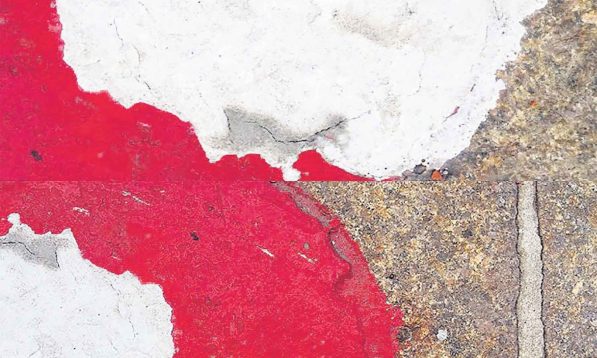
An Emile Zola novel of a life: Untitled, 1963
Haunch of Venison
An Emile Zola novel of a life: Untitled, 1963

Details

León Ferrari
Haunch of Venison
1230 Sixth Avenue
212-259-0000, haunchofvenison.com
Through March 5

Related Content

More About

Like this Story?

Sign up for the Offstage Voice Newsletter: (Up to multiple times a week) Information on theater and the performing arts.

Privacy Policy

Ferrari's story is, among other things, part of the larger narrative of the making and unmaking of artistic influence—especially as it applies to the world's two most influential museums, namely MOMA and the Tate. Another artist whose career, like Marina Abramovic's, announces the expansion of these buttoned-down institutions into new arenas of art history, Ferrari and his newfound popularity effectively illustrate the most recent reinvention of the worldwide modernist canon.

Modernism's storyline—with its beads-on-a-string march through art history—was recently broadened by a series of revisionist shows in New York and London (see, among other exhibitions, MOMA's On Line: Drawing Through the Twentieth Century and Tate Britain's Altermodern: Tate Triennial). The result, as Roberta Smith succinctly put it, made Conceptualism the new Cubism. The ensuing orthodoxy has introduced a museum world order that looks as stable as January's Davos global economic consensus. Brainy postmodernism—that snooty pastiche of old tropes Fredric Jameson pegged 20 years ago as "the cultural logic of late capitalism"—is now, officially, contemporary art's house style. New ism or old ism . . . no matter, it's immensely refreshing to see a figure like Ferrari emerge from the dust of the museum storeroom.

Fortunately for us, Ferrari's actual art—like that of other late-20th-century creators currently suffering the canonical museum makeover—is slippery enough to avoid institutional straitjackets. His Émile Zola novel of a life and his 50-year love affair with multiple media still make him nearly unclassifiable, despite certain institutions' best efforts. A close reading of Ferrari's current gallery exhibition at Haunch of Venison makes his unruliness plain. On a more fundamental note, this artist's originality shines through precisely where his conceptualist New York counterparts appear most conformist—not in the anti-formalist critiques his generation levied against its AbEx forebears (see the toothless cultural politics of early conceptualists like Allen Kaprow and Sol Lewitt), but in Ferrari's use of cutting-edge methods to protest real-life social injustices, most often at significant personal risk.

Ferrari's beginnings as an engineer led him to embrace ceramics, cement, wood, and wire—all malleable stuff through which he could engage volume and space. Traces of a loose, incipient line from these sculptural efforts touch down in several of the exhibition's earliest drawings (dating from the early 1960s), while his relentless techie drive finds echoes in an evolving company of sculptures, mobiles, collages, photographs, texts, and works on paper. Global conceptualism was in the air from New York to Tokyo after the Beatles first LP. In Ferrari's Buenos Aires, though, the stakes were dramatically higher. Experimental art veered away from what Joseph Kosuth—the artist who gave conceptualism its name—breezily defined as a set of "analytic propositions" to art as social change. As the end of the 1960s approached, the streets in front of the Instituto Di Tella, a leading public art gallery, looked a lot like Cairo's Tahrir Square. Just as America's white counterculture basked in the "Summer of Love," South America's capitals braced—like Newark and Detroit—for a long hot summer.

The Argentinean generals' "dirty war" came close on the heels of "Tucuman Arde" ("Tucuman Is Burning")—a landmark event fusing art and politics—in which Ferrari participated. Then came the murder of friends (among them the novelist Rodolfo Walsh); Ferrari was forced into exile in Brazil soon afterward. Finally, there was the disappearance of the artist's son, Ariel. Ferrari had traded making actual artworks in Argentina for what others considered agitprop, but in São Paulo he returned to fashioning objects that brimmed with political responsibility. The issue for him henceforth became how to represent the unrepresentable—how to "express all the terrible things that we were and are." If folks objected to his efforts being called art—as happened in 2004 when his Buenos Aires retrospective was briefly shut down by the local Catholic archdiocese—he declared: "I would not change my course, I would only change its name: I would cross out art and call it politics, corrosive criticism, whatever." Art by another name, he argued, is still art.

Corrosive criticism has, in fact, become the most significant quiver in Ferrari's arsenal. Even if his current exhibition at Haunch plays out his career in polite decrescendo, there is plenty of flash to recall this veteran artist's more spirited offenses. There are several messily calligraphic cuadros escritos, or written canvases, that invoke both his first text works—dangerously titled Letters to a General (1962)—and his near lack of interest in the usual semiological claptrap accompanying language in art (he used illegible "writing" repeatedly to ambiguously approximate words, not replicate their constituent parts). There's a seminal drawing titled, alternately, Noah's Ark or The Impregnating Tree (1964)—a hijacking of the Biblical story with text drawn ark-like around a collaged image of the genitals of Michelangelo's David—that should be enough to send the Catholic League's Bill Donohue, ass over rosary beads, into conservative talk radio studios.

1 | 2 | Next Page >>


Most Popular Stories

for free stuff, theater info & more!

Browse Voice Nation
  • Voice Places

    Voice Places

    Discover restaurants, nightlife, travel, shopping...

  • VOICE Daily Deals

    VOICE Daily Deals

    Get 50 to 90% off every day on restaurants, movies, massages...

  • Best Of

    Best Of...

    More than 10,000 of the BEST things to eat, drink, and experience

  • My Voice Nation

    My Voice Nation

    Join the Village Voice community and get exclusive deals and info

  • Happy Hour

    Happy Hour

    Your local Happy Hour guide at your fingertips

or

Log in or Sign up

Social Connect:

Use your favorite account to access My Voice Nation.


Use your My Voice Nation account to log in:


Forgot password?
or

Sign Up or Log in

Social Connect:

Sign up for My Voice Nation with your preferred network.


Sign up for a My Voice Nation account:


Privacy policy