





[Editor’s note, September 29, 2025: Roughly half a century ago, the future arrived. Or at least, cable television raised its gold-plated noggin for the first time in New York City. Some local cable officials claimed that Gotham was hosting the nation’s first iteration of “people’s television,” even though many areas of the country already had TV delivered through wires to counter poor reception over the airwaves. Whatever the reason, cable TV brought profanity to the small screen and the rest is history, which we all know rolls around first as tragedy, then as farce — or, in 2025, is it the other way around? Certainly there are echoes of our own age, as when the article notes that President Nixon was “reportedly pleased at the chance to undercut the networks by allowing cable to grow, but much more concerned about the heady possibilities of all that television power to the people.”]
→ This article from the archives is part of a series celebrating 70 years of the Voice.
Watch this space between now and October 26, 2025, when we will kick off our Platinum Anniversary year. ←
Cable tv arrives
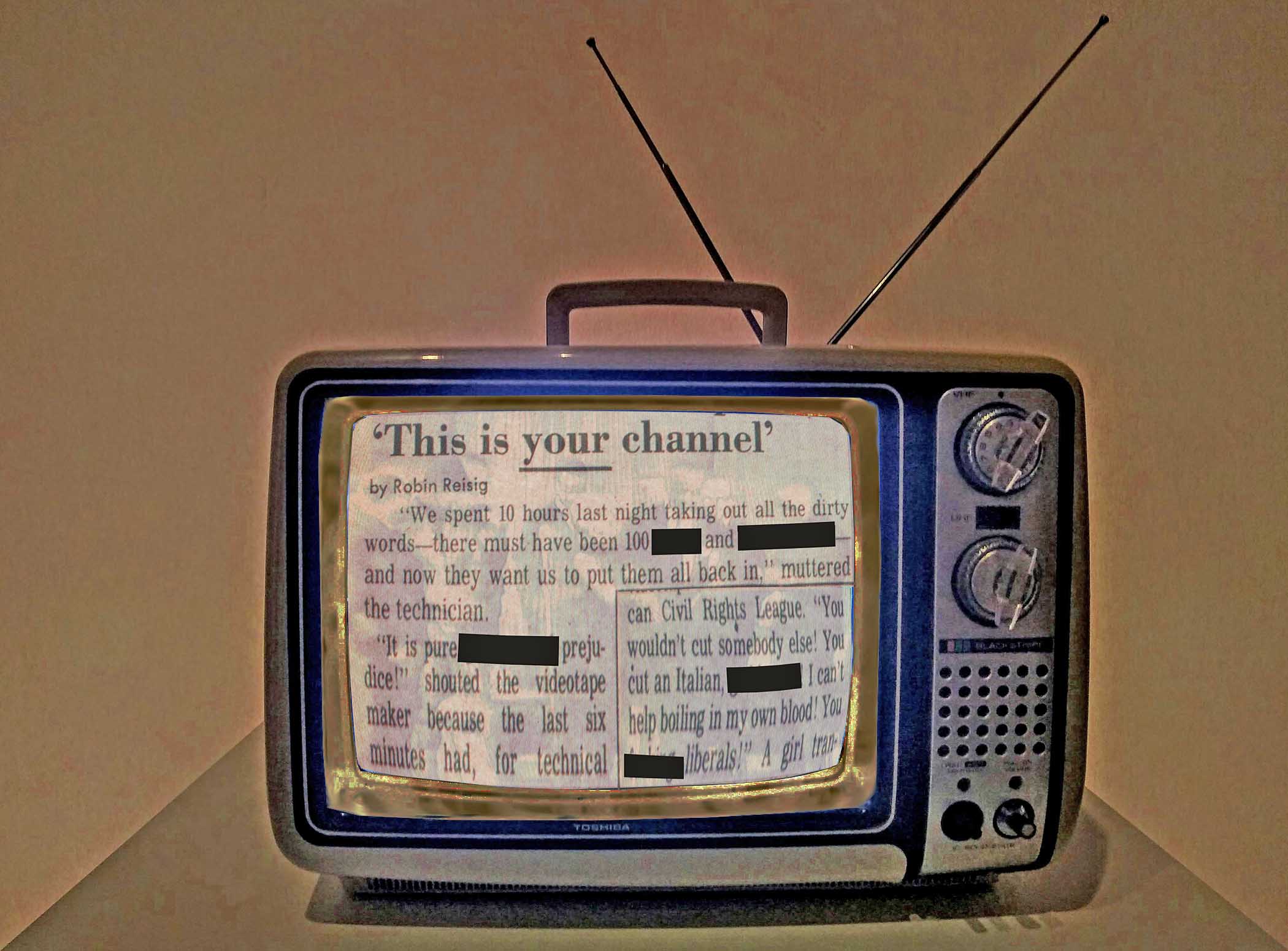
The electronic soapbox: ‘This is your channel’
By Robin Reisig
July 8, 1971
“We spent 10 hours last night taking out all the dirty words — there must have been 100 fucks and cocksuckers — and now they want us to put them all back in,” muttered the technician.
“It is pure goddamned prejudice!” shouted the videotape maker because the last six minutes had, for technical reasons, just been cut out of his videotape on the Italian-American Civil Rights League.
“You wouldn’t cut somebody else! You cut an Italian, goddamnit! I can’t help boiling in my own blood! You fucking liberals!” A girl tranquilly translated it all into sign language for the deaf. The Sterling television screen went black and silent because the videotape maker had stormed the broadcast studio just as the announcer was saying, “This is your channel and you can say anything you want on it.”
It was the first day of people’s television in New York or, cable officials claimed, the country. Last Thursday, Manhattan’s cable television public access channels opened to the public. With its enormous channel capacity and low cost, cable television is supposed to provide an opportunity for diversity of ideas and opinions, for intellectual and ethnic and community programming, not usually heard on television. The first day would not have been broadcast on commercial television.
After beginning by broadcasting on the wrong channel, Sterling-Manhattan Cable Television aired a film by Newsreel in which a woman advised that “the only way to overcome oppression is revolution,” a videotape by Aldo Tambellini, a member of the Italian-American Civil Rights League, in which Joe Colombo revealed how “the FBI steals your money in your house … When you want to get out and fight, fight them,” and film and discussion which used captions and sign language so deaf viewers could “hear” television.
The cable companies are supposed to allow the public to go on uncensored except where necessary to protect themselves from liability. They immediately ran into a censorship problem. A Sterling-Manhattan Cable Television official ordered the “dirty” words cut from videotapes about gay activists and Daytop, but the company president, Bill Lamb, ordered the cuts restored, so opening day was filled with harried de-blipping.
The rules for access to the channels, issued last week by the city, add to the restrictions; they give companies the right to screen programming in advance, bar live programming, and do not allow persons under 18 to reserve time. Airtime will be free, but Sterling will charge $50 an hour to those who wish to use its studio and camera facilities, or refer groups to organizations that can do the technical work for free. Teleprompter, the more public-service-oriented of Manhattan’s two cable companies, is offering its facilities for free.
Do you want to go on television? You can go on now by asking: for Manhattan below East 86th and West 79th Streets, Sterling-Manhattan Cable Television, 120 East 23rd Street, 290-3900, or Kurt Lassen, Automation House, 49 East 68th Street, 628+1010. For Manhattan above East 86th and West 79th Streets, Teleprompter-Public Access, 50 West 44th Street, JU2-3900. Persons wishing assistance in producing programming can contact Open Channel, 415 Madison Avenue, which has funds to help groups create programming and will run video storefronts and a community video system.
Theodora Sklover and Betsy Marston of Open Channel put together Sterling’s first day of interesting programming. “The real question,” said Marston, “is what’ll be on tomorrow or the next day?” So far Sterling, at least, has no applications for use of its two public channels.
A year ago when it awarded the cable franchises, the city promised there would be an Office of Telecommunications to regulate cable and ensure public access. The Office is still unstaffed. The statewide cable television association this winter successfully lobbied against a state bill that would have given the public’s channels common carrier status, which would have mean t no control, not screening for “liability” — or censorship — by cable companies. Federal regulation is still in turmoil, with President Nixon reportedly pleased at the chance to undercut the networks by allowing cable to grow, but much more concerned about the heady possibilities of all that television power to the people.
But in New York the “electronic soapbox,” as cable television has been called, has partly arrived. The electronic part is functioning. Now it’s up to viewers to use the soapbox — from Agnew supporters who rant that the effete, tomentose-tainted media doesn’t tell their story to the tomentose Abbie Hoffmans who get blipped off when they commit mild acts of defiance like wearing an American flag.
❖ ❖ ❖