


→ This article from the archives is part of a series celebrating the Voice‘s Platinum Anniversary — 70 years! — on October 26, 2025. ←
Riffs: Feast
by Annie Fisher
December 5, 1968
Calling it a feast hardly does justice to all the music going down around town last week: give thanks for Thanksgiving and all the students it brings to town to support the likes of Jimi Hendrix, the Jefferson Airplane, Slim Harpo, the Paul Butterfield Blues Band, the Incredible String Band, etc., etc. in one week. There were some I missed — Buffy St. Marie, Jerry Jeff Walker, among others — but the meal was pretty heavy, and dessert was out of the question.
Actually, dessert was all I had on Thanksgiving. I spent the early afternoon in a pastry factory and gorged myself on a day-long Thanksgiving dinner of chocolate immoralities. The later afternoon I spent on the busy stage of a deserted Philharmonic Hall, littered with never-again speakers that Jimi Hendrix had rammed through somewhere else the night before. I don’t know if ABC-TV used the interview they taped with road manager Jerry Stickles and an ebullient equipment man named Eric, but one anecdote Eric told bears repeating even if they did. Asked if he thinks the generation gap applies to Hendrix’s music, he replied that after a Hendrix concert in Pittsburgh, an older lady who had just come from the concert gushed to Eric, “Isn’t it wonderful, all those young people coming out to hear Harry Belafonte!” (Belafonte was scheduled to appear the week after.)
Returning a couple of hours later by the front entrance (I started to write “returning more conventionally,” but I was with the taxi driver who transported me up there; he had asked me if I had an extra ticket, and I did), this time I found the house packed and the stage deserted. I was late, but Hendrix was later. If any fault was to be found in the show it was that it seemed disappointingly truncated. I don’t think Hendrix could possibly not play well, but this fourth time I’ve seen him in concert reminded me again that if you can possibly catch him jamming (not difficult if you stay up late and can make the Scene when he’s in town), you’re going to hear Hendrix at his very best. He is a born entertainer as well as musician, very much at home on stage, but as the innovator he is, he is at his best exploring, experimenting, or even just noodling around in the freedom and challenge a jam provides.
I heard blues singer Howard Tate only in one rather short, late jam at the Cafe Au Go Go, but what he did in that short time was enough to convince anyone of his talent. A very soulful bluesman, he also has a strong sense of showmanship — a comer.
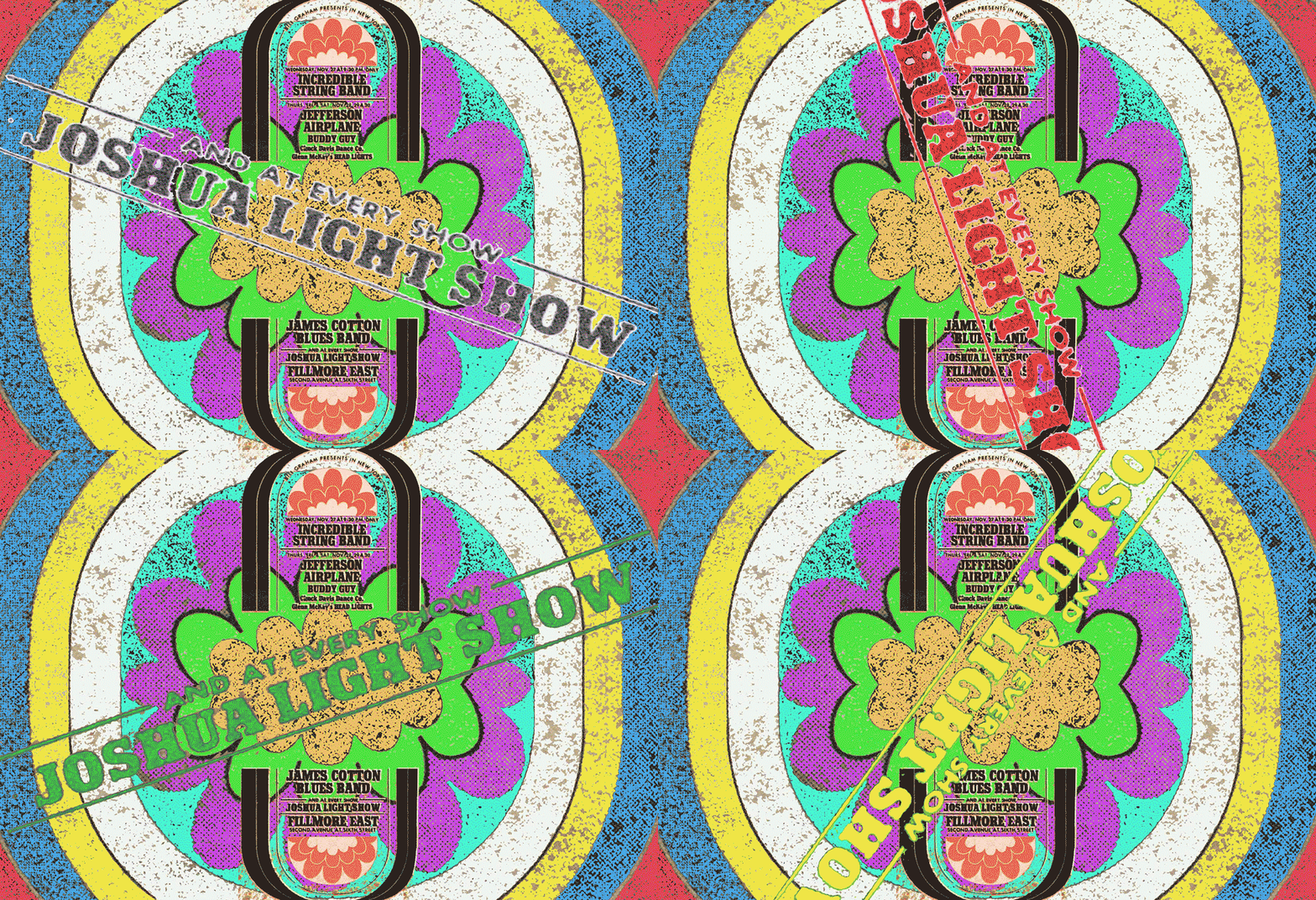
One common denominator of all I heard last week was that, however enjoyable the music was, not much new was happening. The Incredible String Band, whom I heard Wednesday night at the Fillmore East, has two girls now who drone and play along, but the ensemble sound hasn’t changed much (I wouldn’t want it to). If you can adjust your speed to theirs, the Incredibles, with their array of fascinating instruments and abilities, will reward you with profoundly witty, imaginative Scottish folk music for the year 2001.
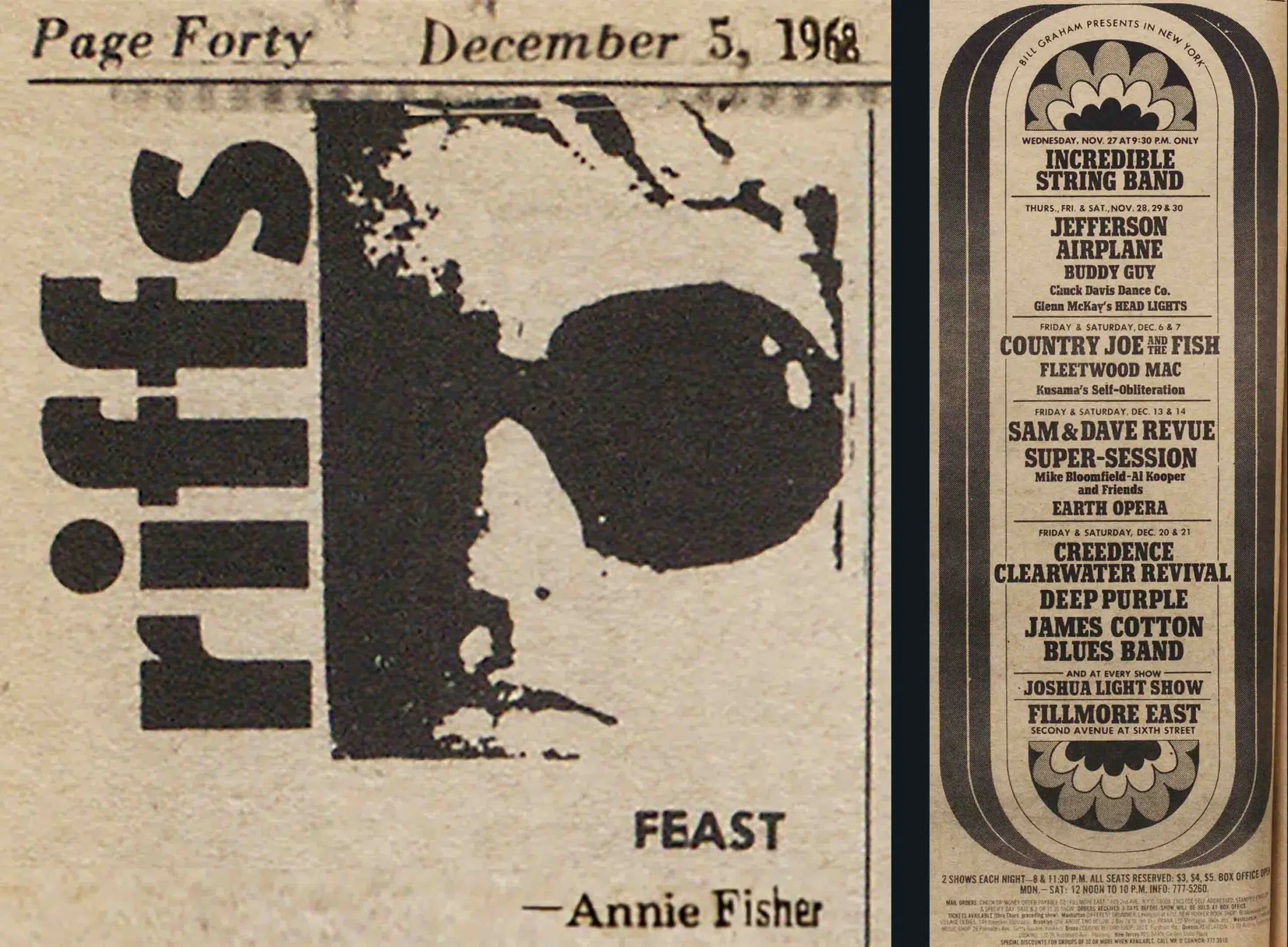
For someone not associated with the group, I must hold some kind of East Coast record for the number of Jefferson Airplane appearances attended. I have never heard one, since the first in 1966, that did not include “White Rabbit” (usually in response to a request). They must hold some all-time record for tolerance. Actually, I heard only two sets this time, although they played the Fillmore from Thursday to Saturday. Again, there are variations in arrangements, but nothing much new, except one very pretty number they did as a final encore, although without Marty who has a part in it, at about 3.30 Friday morning, and a funny encore number on Saturday that comes on as a boogie, then Jorma gets some country licks going, and like that. Jefferson Airplane puts you on.
Buddy Guy, also at the Fillmore, was the bummer of the week for me, confirming my first impression of him a few months ago as being pure plastic. His showy presence may excite some people, but his music is a lot longer on formula-soul and flash than on feeling or blues invention. His grandstanding takes him some funny places. When I came into the Fillmore on Saturday he was in the lobby, singing into one of those radio mikes. But that was slight compared to Thursday, when my taxi driver (same one) and I, not able to take any more of that mechanical playing, had repaired to the second-floor lounge for a cigarette. As he was saying something about Guy’s real milieu being with material like Lou Rawls’ or Oscar Brown’s (I agree), all the other loungers took off for the balcony like they had heat behind them. It soon became obvious why: Guy and two of his sidemen came playing and marching through from front of the balcony and down the stairs to the main floor. I hope no one ever tells me how they got from the stage to the first balcony, a logistical problem for a human fly if the ascent was direct.
Paul Butterfield, on the other hand, is the reason I can’t always trust my first impressions. I have a wad of newsprint words to swallow because of some rather glib put-downs based on one performance of his last summer when the group did sound messy. I heard them last week two or three times at the Cafe Au Gago-MGM-Verve-Forecast blues thing, and my admiration, nay, astonishment, increased with each set, ending with a slightly blown mind on Saturday night when James Cotton jammed with the group. I hardly know where to start with credit, although the most obvious place other than with Butterfield himself (below) is with his teenage lead guitarist, who handles blues with a cool authority that must send seasoned players home to woodshed. The bassist is not only tremendously inventive, but sings some nice blues too. The brass section (two saxes, one trumpet) is together in itself and in the band, which is propelled by a first-rate drummer.
Butterfield as a leader intrigues me. The group is loose on stage, joking among themselves, playing happy. It comes through in every number. If they aren’t enjoying what they’re doing, they’re the most convincing actors in town. And the leader has to set the tone for that kind of action. Butterfield comes and goes from the stage as casually as if the whole thing were a jam, with the aplomb of someone with complete confidence in what he is doing and his men are doing when he’s away. That confidence contributes to the togetherness of the music — which is jazz as much as anything.
Going back to the letter we ran of the spate that arrived after my comments last summer, I am embarrassed to read how right D. B.. Morganstern was and how wrong I was to generalize on the basis of one hearing. After hearing James Cotton play with the band on Saturday I would take issue with Morganstern’s contention that Butterfield is the best harpman around today, but what seems more important is that Butterfield did ask Cotton to sit in. That corresponds to another point Morganstern made, quoting from the notes of their most recent album: “The group’s transformation to horns from a harmonica-based leadership was not easy, but they made it … ‘Butterfield has contributed to this unity by surrendering his ego.'”
Butterfield is certainly a better than competent musician, but his most important characteristic seems to me to be in sensing when to assert and when to submerge his own ego. He uses the band not for an ego trip, but to make music, for creation, which means changes, which he apparently is not afraid of.
Disappointment of the week was not hearing Big Joe Williams at the Blues Bag. Richie Havens, the Pacific Gas and Electric Company, and others on the program deserve mention, but space limitations being what they are … next week, maybe.
❖ ❖ ❖