




O’Henry once said, New York “will be a great city if they ever finish it.” The question is, what do we mean by finished? To whose satisfaction? And to whose ruin?
And if you visit performance spaces in the city, you’ve no doubt encountered the “land acknowledgment,” which gives notice to audiences that they’re sitting on land stolen from Native Americans. With our future teetering in several balances, there’s a lot to be said for looking at and meditating on this past.
Stanley Nelson’s terrific film San Juan Hill, Manhattan’s Lost Neighborhood, assembled from a multitude of archives with the help of a dozen talking heads and a lot of newsreel footage, is Lincoln Center’s version of the land acknowledgment — in this case, admitting that the huge arts institution and its streamlined neighbors, Fordham University and Lincoln Towers, sit on 14 city blocks, nearly 48 acres of land, wrested more than 60 years ago from the eponymous thriving neighborhood that had welcomed new arrivals of all races and classes since the turn of the 20th century. The Metropolitan Opera House; Balanchine’s purpose-built New York State Theater (renamed for David H. Koch, after the industrialist gave Lincoln Center 50 million bucks); the David Geffen symphony hall; the Juilliard School; and the New York Public Library for the Performing Arts, plus two movie houses, trendy restaurants, and a multi-stage drama complex, cluster together around a marble plaza with a spurting fountain. Down Broadway, in an upscale mall, sits the newest addition, the headquarters for Jazz at Lincoln Center. At the back of the original site there’s an open-air performance space, with room for circuses, free concerts, crafts fairs, and other amenities designed to attract tourists and appeal to the area’s new residents.
Early in the film, author James Baldwin (1924–1987), the incredibly productive Harlem native who became a leading writer, thinker, and orator in the civil rights movement of the 1960s, declares, “urban renewal means Negro removal.” Ariana DeBose, the Oscar-winning actress/singer who played Anita in Steven Spielberg’s 2021 remake of West Side Story, narrates the heartbreaking tale, which runs just under an hour. The Spielberg film uses historical footage of the destruction of the original neighborhood; the original 1961 West Side Story was shot on-site as demolition was underway, leaving its filmmakers free to reorganize the debris to their own purposes. DeBose is ably accompanied by a phalanx of historians, sociologists, artists, and former residents of the neighborhood that was destroyed in order to build, in the late 1950s and early ’60s, Lincoln Center for the Performing Arts.
Almost none of the original residents of the area were able to resettle nearby; they lost their schools and their businesses, and the elderly lost crucial lifetime friendships.
The neighborhood had played host to a flourishing Black bohemia decades before the Harlem Renaissance. Filmmaker Nelson, a 73-year-old MacArthur “Genius Grant” fellow, multiple-Emmy-winning director, and native New Yorker, was commissioned by Lincoln Center to create this film. He foregrounds the cultural history of the ’hood, which hosted the premiere of Eubie Blake and Noble Sissle’s 1921 Shuffle Along, at the 63rd Street Music Hall, a rundown theater without an orchestra pit. The show, which ran for years, launched the careers of Josephine Baker and Paul Robeson. Also native to this district was the Charleston, a dance inspired by a James P. Johnson tune featured in a 1923 Black Broadway musical, Runnin’ Wild.
Jazzman Thelonious Monk walks away with the middle of Nelson’s movie, both in person, featured in wonderful clips of his attention to the sounds of city streets (“I’m listening to the traffic. There’s a rhythm to the traffic.…”), and in elegiac commentary by drummer Thelonious Sphere Monk lII, his son. The song “Blue Monk,” which in a 1963 interview Monk pére said was his favorite composition, underscores much of the film. The Sondheim-Bernstein anthem from West Side Story, “There’s a Place for Us,” ironically tinkles under the rest.
There’s also newsreel footage of the demonstrations that continued for three years during the demolition and construction, with picket signs reading “Shelter Not Culture.” Former City Council member Ruth Messinger makes a brief appearance, as do President Eisenhower, at the groundbreaking, in 1958, and several members of the Rockefeller clan, the powers behind the redevelopment.
The elephant in this landscape was Robert Moses, who was inclined toward “urban renewal,” the impulse to cleanse the neighborhood of its ethnic residents. After World War II, 700,000 Puerto Ricans moved to the mainland, the vast majority to New York City, and many to the still affordable San Juan Hill area. Moses was the engine behind the redlining and the “slum clearance” designation which led to the act of eminent domain that resulted in the wrecking balls, the forced relocation of an entire community, and the building of our vaunted cultural plaza, Lincoln Center (the host of this screening), as well as Fordham University and what is now the Lincoln Towers co-op complex (where a one-bedroom apartment can currently be had for a cool million).
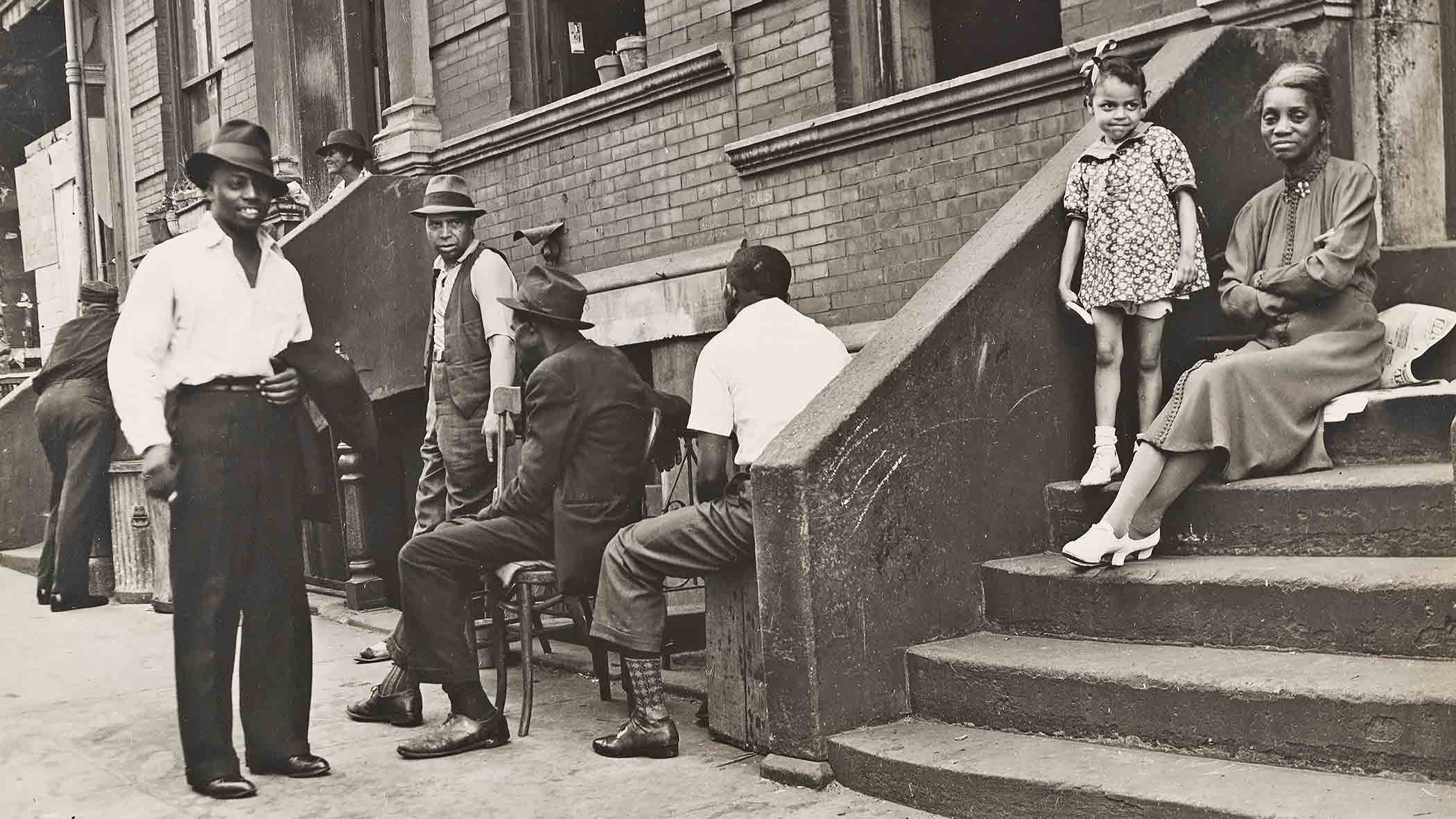
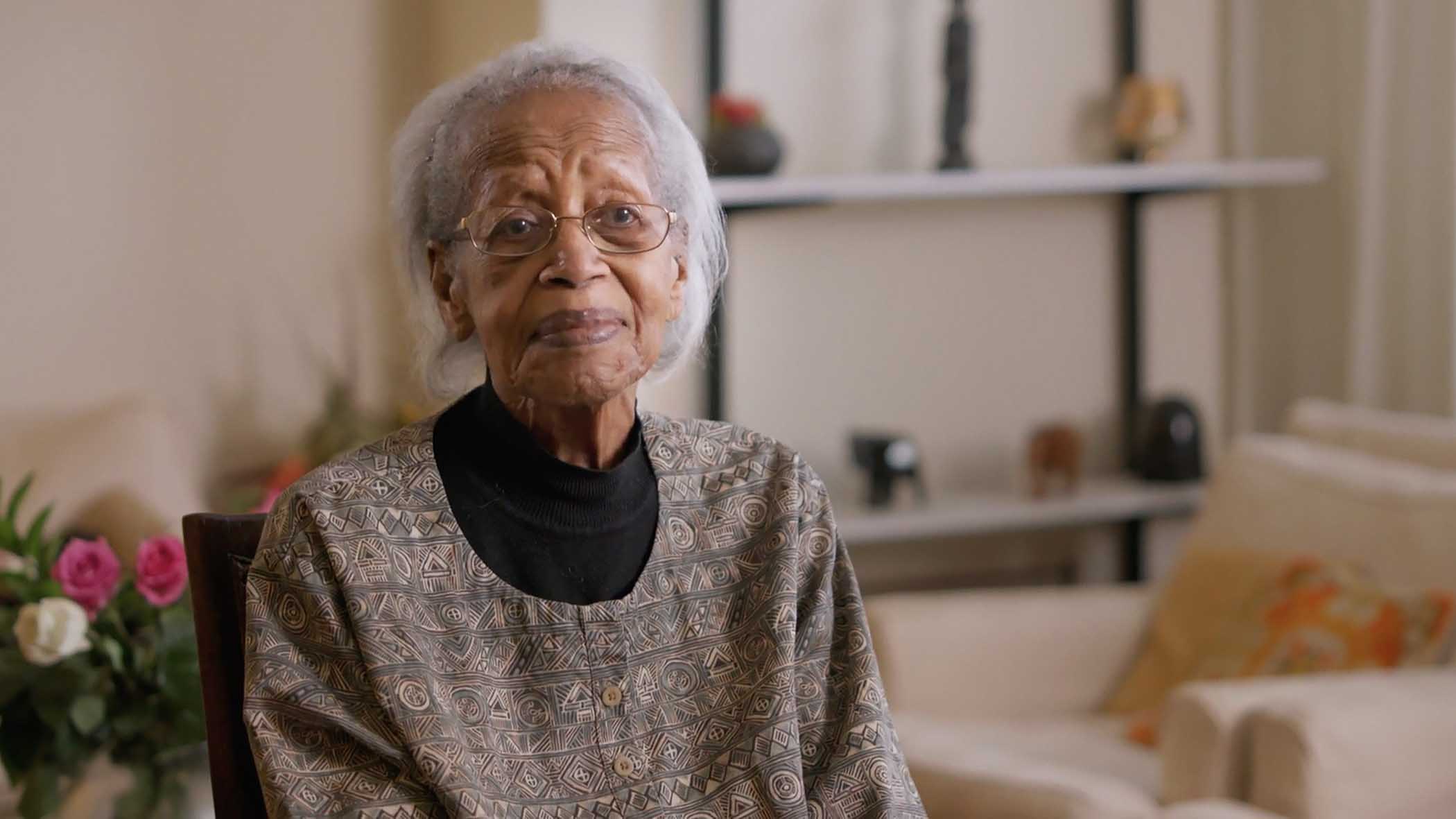
Almost none of the original residents of the area — living in postwar projects like the Amsterdam Houses and the Phipps Houses, which had attracted and sheltered thousands of immigrants and provided vital social services, and in the aging tenements in the district from West 58th to West 68th streets, from Broadway to West End Avenue — were able to resettle nearby. They lost their schools and their businesses, and the elderly lost crucial lifetime friendships. “We lost our community,” says Louis Patalano, who later got a job as a stagehand at the Metropolitan Opera. Mavis Swire, a remarkable native of the area who became a nurse and lived into her 11th decade, did stay in the area, but for most of the rest of the 7,000 residents who lost their homes, and for the 800 businesses that were forced to close, it was a tragedy.
Residents of the area, we learn, were offered free tickets to the new theaters, but most chose not to go. At the end of the film, text and narration offer a promise to break down the “marble wall” that currently seals the arts behemoth off from the neighborhood to the west. We shall see. On the Legacies of San Juan Hill website — a collaboration among Lincoln Center; CENTRO (The Center for Puerto Rican Studies at Hunter College); and the Schomburg Center for Research in Black Culture (part of the New York Public Library) — supported by the Stavros Niarchos Foundation, we find the following conclusion: “Lincoln Center is committed to interrogating our role in this history, too long ignored, and building a more just and inclusive cultural home for all.” The site hosts articles by the academic talking heads in the film, as well as panel discussions.
Lincoln Center got a new president last month, the youngish, brilliant Mariko Silver, a former president of Bennington College and an expert in international affairs, who grew up in the city. Things may be looking up. If you can’t get in to see San Juan Hill on October 9, make noise until they screen it again, or run it on PBS. ❖
San Juan Hill: Manhattan’s Lost Neighborhood
Produced and directed by Stanley Nelson
New York Film Festival Special Event
October 9 at 6 p.m.
Alice Tully Hall, Lincoln Center
Elizabeth Zimmer has written about dance, theater, and books for the Village Voice and other publications since 1983. She runs writing workshops for students and professionals across the country, has studied many forms of dance, and has taught in the Hollins University MFA dance program.