



Set in that always-just-receding near future of Neuromancer, Watchmen, and other touchstones of late-20th-century sci-fi, Scott Hoffman and Danijel Žeželj’s graphic novel Nostalgia leavens in A Star Is Born pathos to ruminate on the soul-consuming tribulations of mega-fame and faded ideals. Writer Hoffman imagines a world where a musical hyperstar — a kid from nowhere who names himself Nostalgia and conjures sonics derived from his own memories, which he pours into the heads of adoring “experiencers” via a “techno-tiara” that each audience member wears — has retired from his craft and disowned the revolutionary tremors he incidentally transmitted to the raving masses. “I remember those days. When we thought protests would change the world,” Nostalgia muses as he tools through a teeming cityscape in his luxury sports car, with a hovering frisbee-size disk always trailing nearby, an electronic bodyguard keeping the metropolis’s constantly milling protesters at bay. He continues his inner dialogue with sentiments that track our own time: “Singing songs of revolution. Inspiring future leaders everywhere to sit in their bedrooms and post grievances online.”
The future arrives throughout the tale.
Žeželj’s spare, lithe delineations of faces and bodies have the graphic verve of a Banksy hit-and-run spray stencil, propelling a plot exploring lost youth and technocratic oppression. Hoffman opens each chapter with a meta-text — including a hagiographic review of an early Nostalgia concert-cum-mind-expanding trip, a report on the abruptly rich performer’s penthouse digs, gossip column tidbits, and a semi-retraction of the critical rave from three years earlier after Nostalgia has retreated from public view — that weaves in backstory and fleshes out tart subplots.
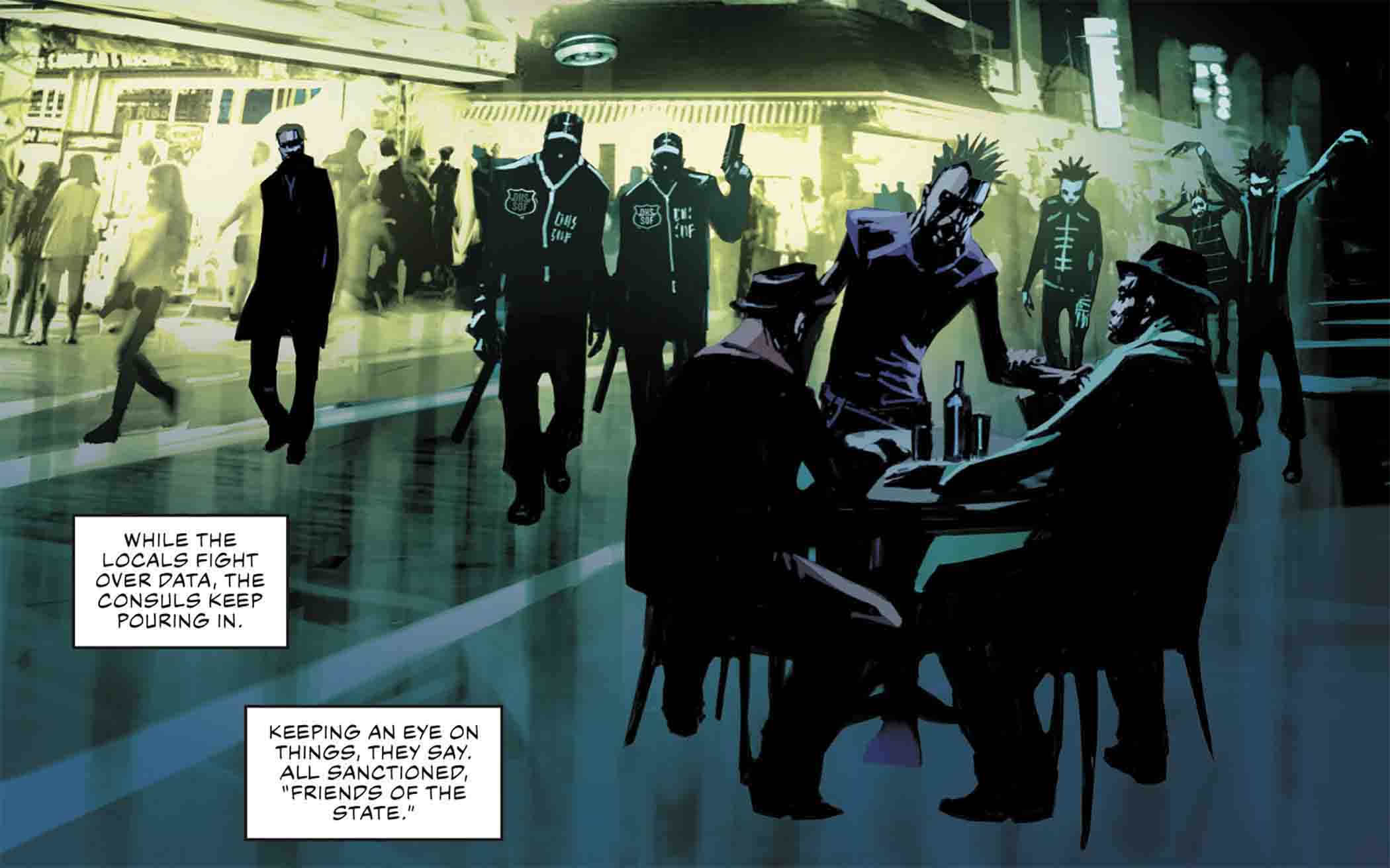
The future arrives throughout the tale — liquid-filled medical tanks brimming with nanobots that extract bullets, a tech magnate’s orbiting mansion where terrestrial laws float as frictionlessly as his servants — which Žeželj captures less through control-panel details than with quick glimpses of, for example, luminous, unrestrained urban sprawl edged with lens flares and jagged abstract ribbons representing the mind-tunes. Zigzag haircuts, streetlamp shadows, gloomy color contrasts, and chic overcoats might have readers of a certain age flashing back to David Bowie’s catalog — not so much Ziggy Stardust or Diamond Dogs but the subterranean Berlin vibes of Low.
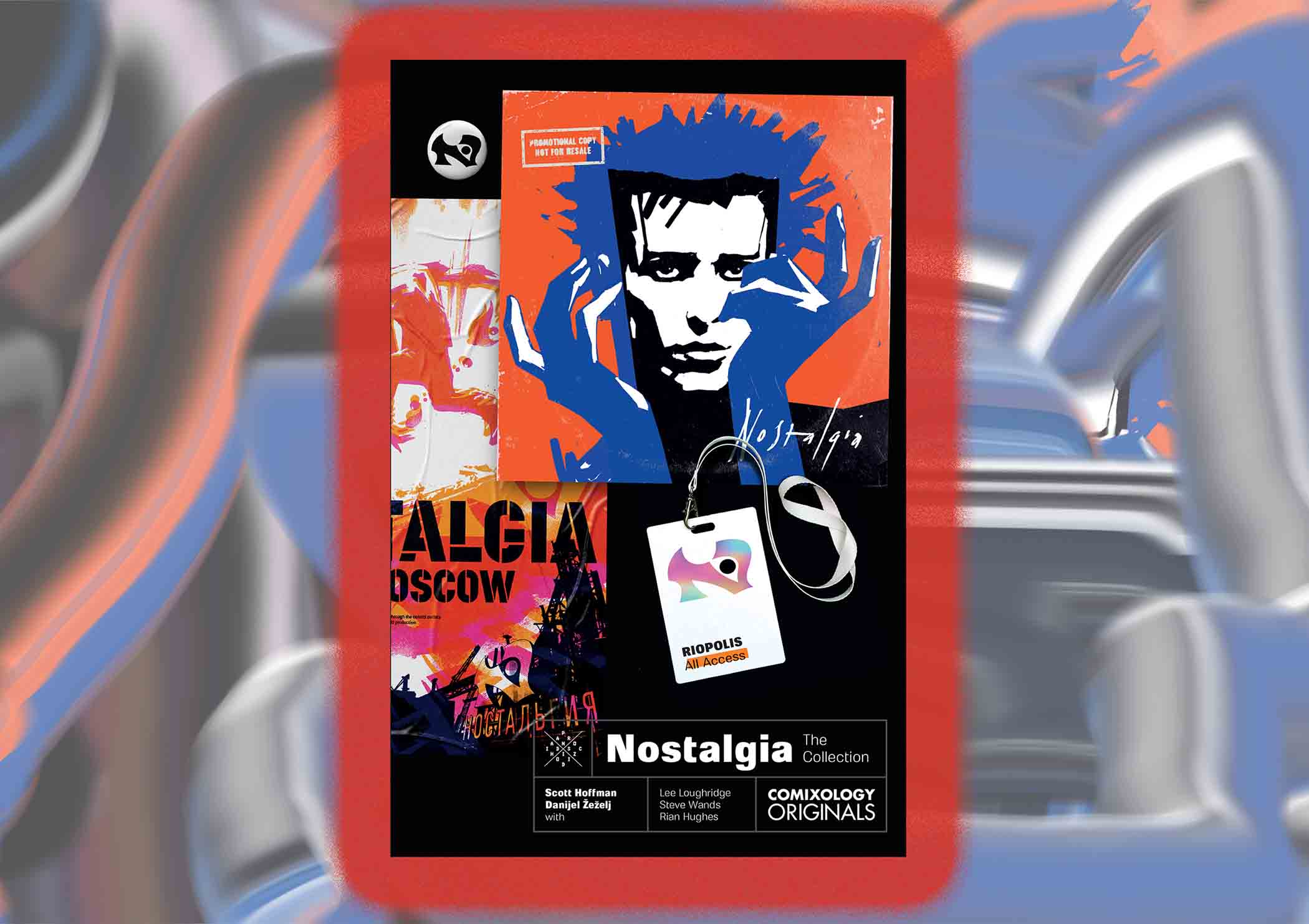
Nostalgia wends toward redemption while the younger generation tackles new sounds and revolutions as old as human society. It’s to the novel’s credit that you’re left wanting to hear the music and join the cause. ❖