







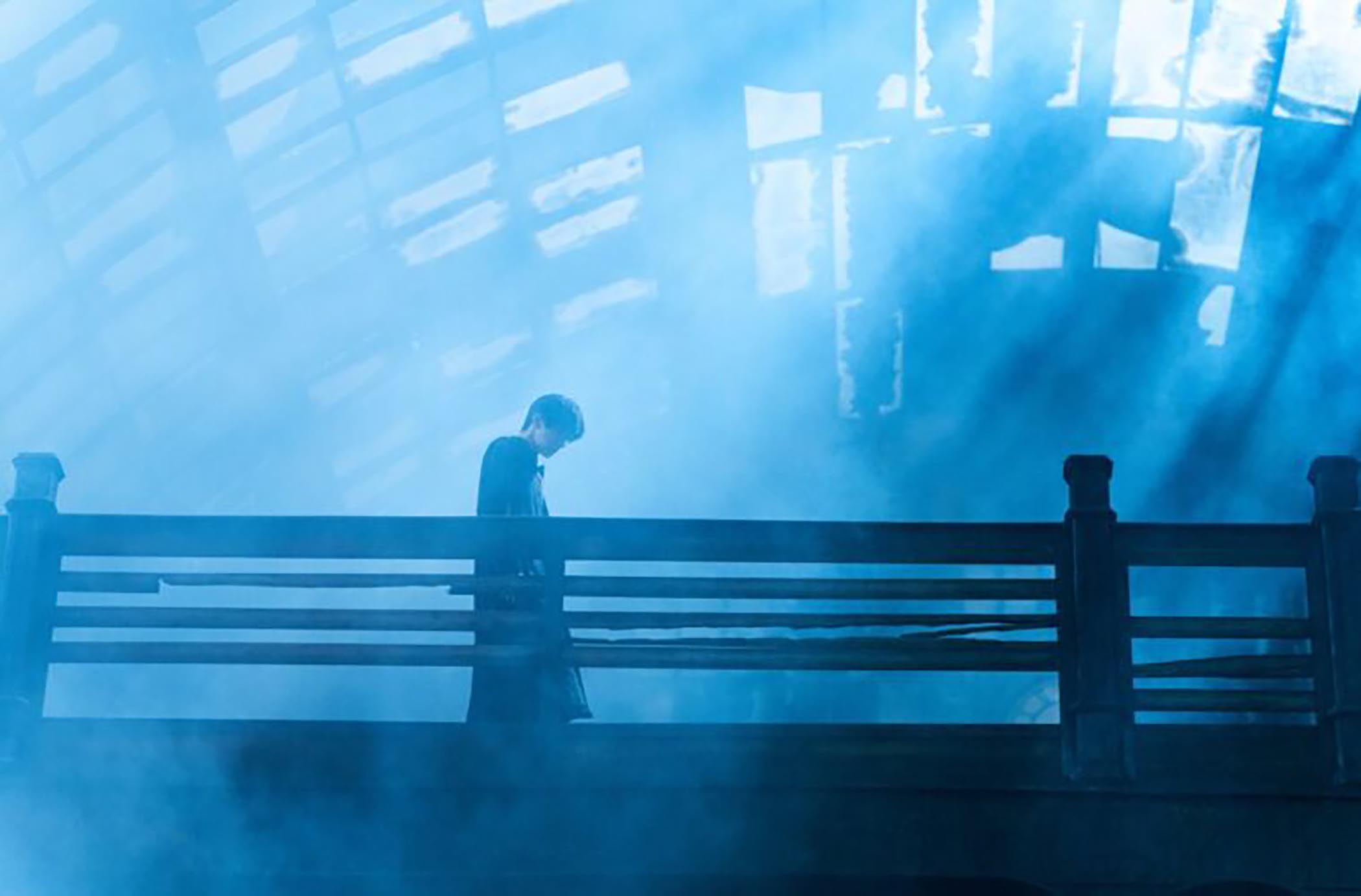
Having trouble sleeping? Try Bi Gan’s slow cinema experiment, Resurrection. Side effects may include drowsiness, boredom, and increased sense of confusion. Ask your doctor about Bi Gan’s Resurrection today!
While it’s not easy bashing such an ambitious and visually wonderful production, the experience of watching this meandering phantasmagoria is akin to taking a shot of Nyquil. You can feel your eyes struggling to stay open while you drift in and out of sleep, which is ironic for a movie about dreamers in a dystopian future where dreams have been banished altogether. This somehow means humans can live forever, but the select few who choose to keep dreaming, known as “the Fantasmers,” live exuberantly bright yet exasperatingly short lives.
It doesn’t exactly make sense, nor does an opening sequence in which a cloaked villain pursues a Fantasmer around a city of German expressionistic sets straight out of the silent era, but then again, plausibility is far less important to Bi Gan than visceral sets and long camera takes. Even when your eyes are nodding off, you can’t help but drop your jaw in disbelief during a 40-minute unbroken shot of the Fantasmer and his girlfriend strolling around a riverside apocalypse, shrouded in smog, mist, and pointless desires. It’s just one of many eye-catchingly dull moments in this overwrought spectacle.
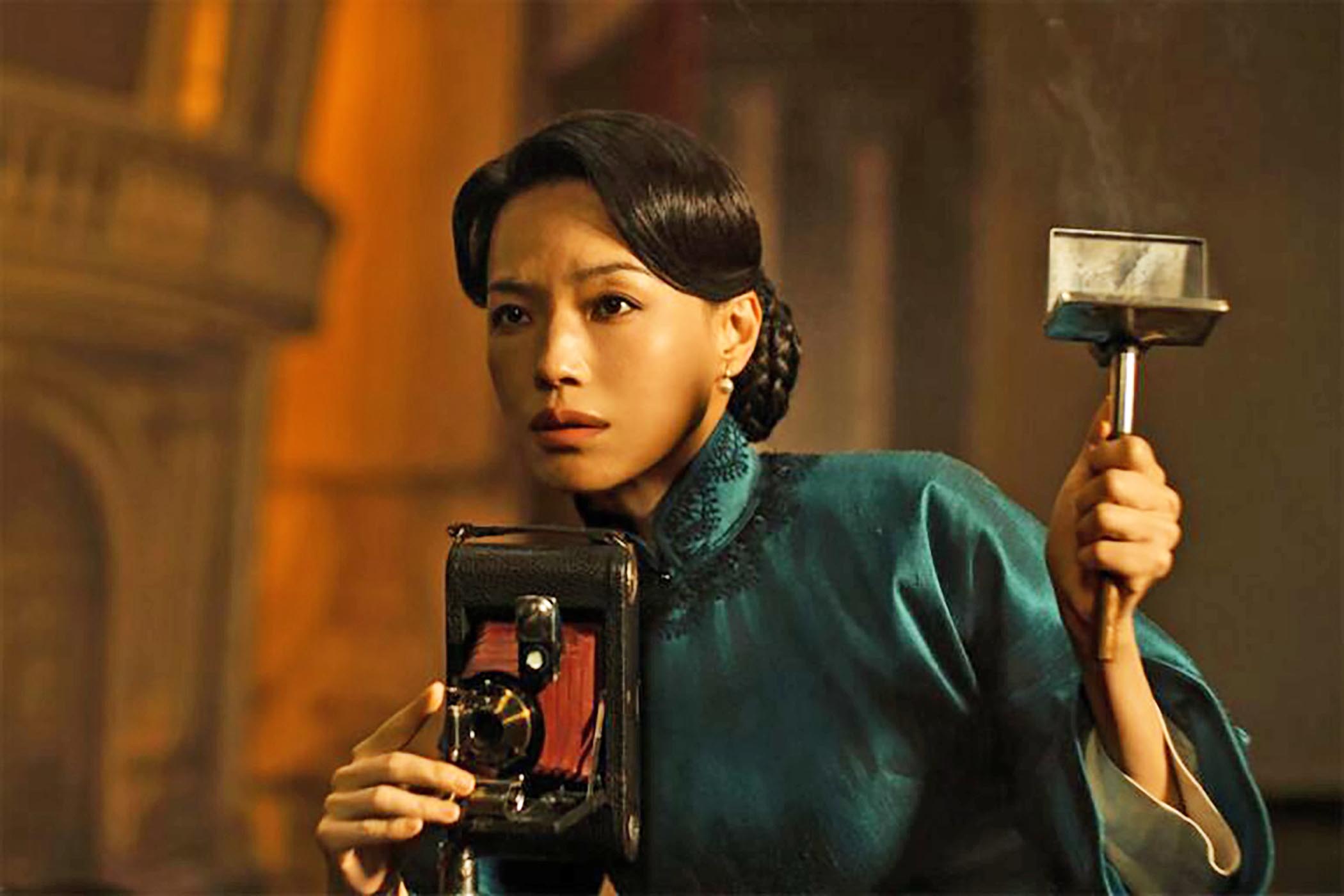
In fact, the entire film (which spans 155 minutes) is made up of painfully slow, profoundly beautiful pastiches, separated into five segments that span the course of 100 years and are constructed to emulate the era of cinema during that specific period. The 1920s follows a Fantasmer vampire that looks like Nosferatu, the WWII section follows a trenchcoat-clad investigator straight out of a Jean-Pierre Melville thriller, the 70s take place in a Buddhist temple, the 80s sees a Scarface mobster try to reconnect with his child, and the finale is set in a red light district on the eve of the millennium. The Fantasmer reappears in each section as a different character with a different look, stalked from era to era by a fascist dictatorship. Why are these people not allowed to dream? What ties their eras together? How does it all connect in the end? I couldn’t tell you if I tried.
Bi Gan’s Resurrection is a puzzle missing half its pieces, made up of ethereally meticulous sections that don’t quite mesh together. Upon investigation, none of these neon-hued, rain-soaked stories are tied together by any motifs other than a reverence for cinema and dreams, which is fitting subject matter for a slow cinema experiment (a’la Tarkovsky) but isn’t grounded by anything remotely personal.
Unfortunately, Bi Gan’s film is so stylishly surreal, it forgets to include anything real. A Buddhist fighting a toothache, a vampire lost in space — none of these vignettes have any plot or emotional substance and seem to drag on for centuries. The most amusing moment in the film, which is narrated over that mesmerizing 40-minute camera take, is a whimsical meta joke about the film’s egregious length. If you’re still awake by then, you’ll be dreaming for the credits to roll. ❖