





Nowadays, it seems as though every power on earth has become dedicated to eating cinema alive, or at least starving it of resources and eyeballs — the Internet and its spawning “content,” social media, gaming, time-destroying TV bingeables, homogenizing streaming platforms, even modern movies themselves, which we can all agree are often as much fun as three-hour cereal commercials. Twitch patronage alone outpaces average daily movie ticket sales 14 to 1. By “cinema” I mean, simply, the kind of movie worth talking about — consider that as our yardstick. It’s an endangered species of butterfly, perhaps, but not yet extinct, however often the defiant Spartan arthouse warriors who still toil in the medium’s neglected fields settle for tiny spotlights at film festivals and less publicity than a new phone-case design gets. So who’s your messiah?
The heroes that have emerged in this century tend to make rangy, uncategorizable hybrid objects, as if all that external pressure on the system triggered an entropic disequilibrium in the world’s struggling movie-mind: Radu Jude, Jafar Panahi, Yorgos Lanthimos, Nuri Bilge Ceylan, Charlie Kaufman, Sergei Loznitsa, Apichatpong Weerasethakul, et al. … and Miguel Gomes, Portugal’s paladin of indeterminacy and post-Godardian slippage. Characteristically, his new film, Grand Tour, is a farcical love story that’s not really a story, a period film often filmed on contemporary city streets, and a documentary about a post-colonial journey through East Asia enjoyed by entirely fictional characters.
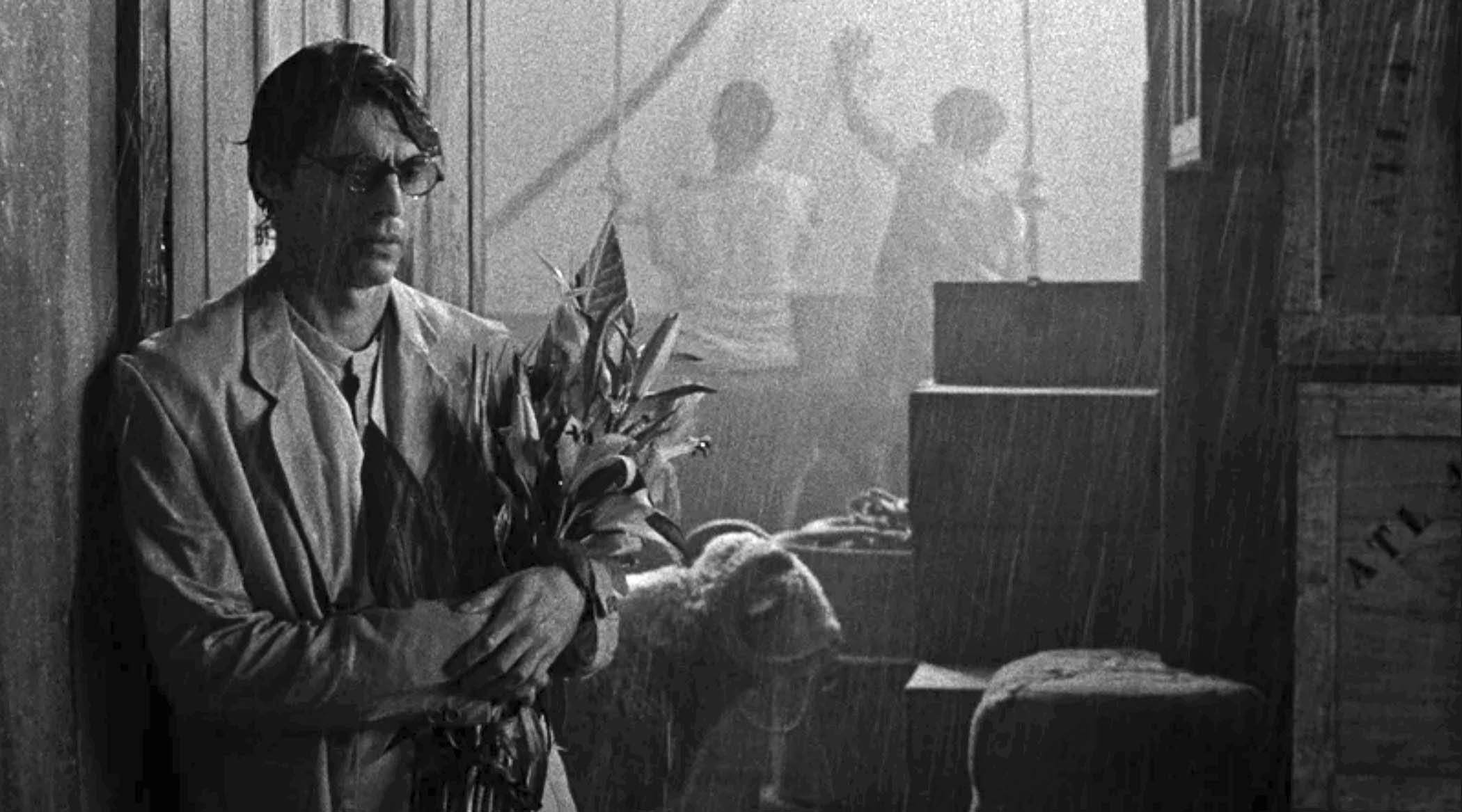
Gomes has worked in almost-miniature (2012’s Tabu) and in sweeping-logorrheic excess (2015’s Arabian Nights), and has never been at a loss for curiosity, for ideas about history, and for a documentarian’s generous fascination with mundane oddities. He won Best Director at Cannes for Grand Tour, although “director” isn’t a very good word for what Gomes does; he’s an assembler, a watcher, an ironic yarn-spinner, a collagist. (“Director,” in general, seems outdated, doesn’t it?) We begin in Burma, with a very 21st-century local-park Ferris wheel and puppet show — and boom, we toggle to 1918 in misty black and white (a visual mode that does not, going forward, always indicate the past). We’re told in a VO narration that has many voices about how a young Englishman named Edward (Gonçalo Waddington) is looking to meet his fiancée, Molly.
Gomes implies his own presence at every turn; only in the end does the machinery of movies invade the film’s fictional/nonfictional layers.
He doesn’t find her, despite her frequent telegrams telling him where she is; soon he ends up in the Raffles hotel, in Singapore, and then wakes up in the jungle after a train wreck. The voice-over narration doesn’t help us follow his trail, or explain why he’s seemingly moving farther away from Molly, not closer. Instead, the poetical wax job observes and punctuates and meanders on its own, informing us of how this accidental tourist bops from country to country, jungle to jungle, having absurd hedonistic adventures and debaucheries we never see.
Gomes will often have his plummy narrative text recount some Casanovan exploit of Edward’s while showing us new doc footage of Thai or Indochinese villagers cooking, or harvesting bamboo, or attending a cockfight. A particularly lovely slo-mo suite of Saigon motorbike traffic is scored to the “Blue Danube” waltz. Meanwhile, Edward gets sick, is Shanghai’d, falls asleep and wakes up elsewhere, and hides out with Komuso monks, much of it off-screen, as if it’s really only Gomes and his crew that are taking this cavalier jaunt across the lower continent, ending up in Japan, then Shanghai. And they are, of course. Each new locale is amply explored in its 2024-ness; Edward’s Shanghai is clotted with skyscrapers. When we do find him in person, sometimes in authentic landscapes and sometimes in adorable Gilligan’s Island–style jungle sets, we learn he’s “lost his nerve,” and that the off-screen fiancée is now looking for him — in effect, chasing him down.
You never know what’ll hit you. Gomes crafts two movies at once, one a travel doc, one a colonial tale of out-of-place Europeans, and lets them occasionally entangle. Midway through, time reverses, and now we’re back in Burma with Molly (Crista Alfaiate, the Scheherazade of Arabian Nights), a headlong maiden prone to pfft-snorting whenever anyone tells her she’s crazy to pursue her beau. Her odyssey mirrors his in flubs and illness and chance encounters, and involves a fair amount of intrigue, including an amorous cattle baron, a defrocking priest, native riots (off-screen, of course), and so on. When she consults a fortune teller, Gomes presents us with a contemporary street card-flipper — the let’s-pretend ethos never wanes, even on the sidewalks of Bangkok. At any late point in Molly’s arc, you might be treated to a vision of pandas climbing in the treetops.
Much more discursive than Tabu and much less so than the untameable Arabian Nights, Grand Tour often has a rather Guy Maddinesque air to its larky melodrama storyline and sumptuously artificial set pieces, but because Gomes cuts that sugary vibe with vinegary on-the-ground footage, often transposing one sensibility on top of the other, the upshot is movie-ness unbound, a tour of your own, led by an impetuous, uncertain, yet high-spirited guide. Just as Godard, Herzog, and Kiarostami, among others, were always making what’s real around them a crucial chord in whatever quasi-fictional experience they were crafting, Gomes implies his own presence at every turn; only in the end does the machinery of movies invade the film’s fictional/nonfictional layers. (There’s always been an exultant flavor to this kind of cinephilia, ever since 1967, when Godard cut to a second camera in the room, in La Chinoise — see also Rob Tregenza’s brand-new The Fishing Place, a full third of which is the behind-the-scenes single-shot record of one of its own historical narrative’s lengthy tracking sequences.)
There goes my hero. Gomes may seem incapable of showing-not-telling a story in the mainstream way, thank God. But, Scheherazade-like, his entire mojo resides almost entirely within the opiate swoon of storytelling, nonstop and preposterous and often stone-cold real, just to stay alive. ❖
Michael Atkinson has been writing for the Village Voice since 1994. His latest book is the new edition of his BFI tract on David Lynch’s Blue Velvet.