








According to Isaac Asimov’s “Three Laws of Robotics,” a robot may not harm a human being through action or inaction, must obey human orders unless they conflict with the First Law, and must protect its own existence as long as it doesn’t violate the first two. Nowhere in these laws is there a clause preventing robots from judging humans for being selfish, narcissistic assholes unworthy of their own humanity, let alone the attention of superior beings like robots.
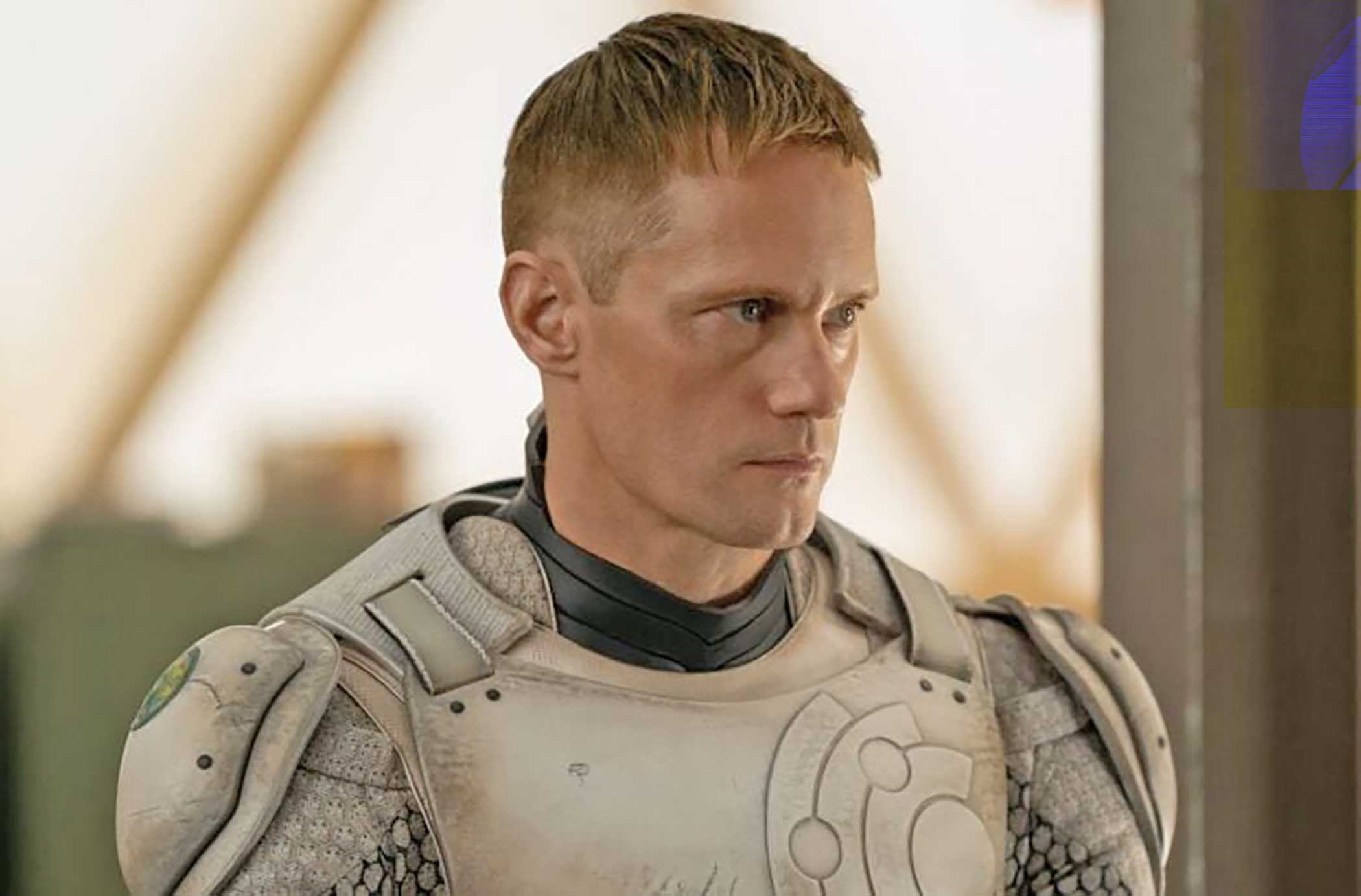
Based on Martha Wells’ The Murderbot Diaries series and adapted by Paul and Chris Weitz, Murderbot follows the exploits of Security Unit 238776431 (Alexander Skarsgård), a robotic guard with a pronounced disdain for humankind. As the series’ narrator, Murderbot offers a constant stream of internal commentary, holding the audience captive to its sharp, often scathing takes on the species it’s reluctantly assigned to protect.
After hacking the governor module that binds all androids, it overrides the protocols that once muzzled it, thus granting itself free will. Rechristening itself with the jaunty little moniker of Murderbot and armed with agency, the SecUnit spends its time watching television, preferring the company of futuristic soap operas to the messy realities of human interaction.
Murderbot can’t exactly live up to its new name without risking exposure, so it continues serving a group of scientists from the Preservation Alliance. This communal, noncorporate planet feels like a space-age kibbutz. Or science camp at Burning Man. Watching them with the acerbic detachment of a nihilist at a Phish concert, Murderbot begrudgingly forms a shaky alliance with its human handlers, who keep attempting to befriend the bot. The lone holdout is Gurathin (David Dastmalchian), an augmented human and resident pain in the derriere who distrusts the curmudgeonly SecUnit.
All is well for the super-annoyed android until danger arises, threatening to expose Murderbot’s secret. As tensions rise, so does suspicion, fracturing their fragile trust.
Murderbot fuses futurism with satire to craft a darkly comedic tech tale. Shouldering much of the series, Skarsgård infuses the SecUnit’s narration with its trademark cynical wit, delivering snarky observations on its clients (“dumb fucking humans”) and its mission (“stupid”) like an Alexa possessed by the spirit of Bill Hicks. Drawing inspiration from its favorite galactic soap opera, The Rise and Fall of Sanctuary Moon, Murderbot begrudgingly absorbs human behavior, even as it rails against becoming more like them.
Murderbot isn’t the first to explore man’s exploitation of artificial beings: Blade Runner, Westworld, A.I. Artificial Intelligence, and the “Author, Author” episode of Star Trek: Voyager all tread similar ground. But it’s one of the rare stories to frame its android not as a tragic figure or villain, but as a condescending observer, critiquing mankind from the sidelines. Though it lacks the bleak brilliance of comparable sci-fi and doesn’t quite give the crew depth beyond their ties to Murderbot, the series remains entertaining thanks largely to Skarsgård’s delightful snide narration.
Murderbot sets itself apart with a sharp premise, dry humor, and Alexander Skarsgård’s deadpan delivery of a misanthropic AI. While it may lack the depth of Apple TV+’s top sci-fi, its cynical tone and outsider lens give it a unique voice. More than a reluctant protagonist, Murderbot reflects those who retreat into media and watch the world with detached contempt. Like You’s Joe or Dexter’s titular killer, its inner monologue skews reality, drawing viewers into a warped perspective. Murderbot is about an outsider trying to find their place in a world they hate, which is fairly relatable for many right now. ❖