





“My goal is to make films of as many different aspects of life as I can,” said Frederick Wiseman during a 2015 Reddit AMA session, held to support his 42nd film, National Gallery. A documentary about the British art museum, the movie is entirely typical of Wiseman’s approach: Find a place, film it for six to eight weeks, and then edit 100-plus hours of footage into a coherent feature. No talking heads, no added music, no animations, no intertitles, no opening credits, no stock images, no archival material, just complete immersion in a single location. When Wiseman says, “There is great drama, tragedy, comedy in ordinary experience,” he means it.
Now through March 5th, 40 of Wiseman’s features are being presented by Film at Lincoln Center, 33 of them in new 4K restorations, work done by Wiseman’s documentary film distribution company, Zipporah Films, and overseen by Wiseman. The retrospective covers almost six decades of documentaries, starting with the controversial Titicut Follies (1967) and taking us through locations including seven schools, two hospitals, a ski resort, a department store, four military bases, two courts, a Michelin star restaurant, a Benedictine monastery, a modeling agency, a meatpacking plant, a primate research center, a police department, a theater troupe, a welfare office, a racetrack, a domestic violence shelter, a public housing project, a zoo, a state legislature, two ballets, a small fishing town in Maine, and even Central Park.
In the early 1960s, Wiseman was teaching law at Boston University. He was in his 30s, he was married, he had kids. But he’d also been playing around with an 8mm camera and wanted to try something new. In 1960, pioneering work with portable sync sound cameras by Robert Drew at the Time Life company made it possible to shoot a black and white movie on the cheap. A wave of no-budget features followed, and filmmakers like D. A. Pennebaker and Shirley Clarke rose to prominence. Wiseman wanted in, so he hired Clarke and produced her film The Cool World (1963), a fictionalized portrait of Black street gangs with music by Dizzy Gillespie and Rahsaan Roland Kirk. After Clarke’s movie was released, in 1964, Wiseman decided “there isn’t any special mystique to directing and that I’d never make a movie I didn’t direct and edit myself.”
From his early muckraking exposés to his longer, looser portraits, Wiseman’s documentaries exposed human decency and human cruelty through the institutions we’ve made for each other.
Titicut Follies, Wiseman’s 1967 debut, covers daily life in Bridgewater State Hospital, an asylum for the criminally insane an hour outside of Boston. Wiseman had made a point of taking his law students there, saying, “I wanted them to see the inside of the kind of institution they might someday be committing someone to.” With the documentary, he set his sights on exposing Bridgewater’s inner workings to a wider audience. “I need help but I don’t know where I can get it,” says a convicted pedophile. “You get it here, I guess,” replies the doctor. He’s right not to be confident. Bridgewater circa 1967 was a horrible, inhumane place. Force feedings, ritual humiliations, and prolonged public nudity were all part of the supposed “treatment” administered to the institutionalized. When not being punished, the inmates never seem quite at ease, engaging in strange leisure activities that, taken with the violence, are unnerving: A muscular inmate does a headstand in the yard; another slurps his own bath water (“Like champagne,” he says); a balding Black man plays trumpet; a toothless old man sings along to “Chinatown, My Chinatown” in a monotone. These scenes stick with you.
Titicut Follies (named after the Bridgewater talent show, which bookends the film) was banned in Massachusetts, just before its 1967 premiere at the New York Film Festival. The subsequent notoriety helped to raise Wiseman’s profile, and his next two features, High School (1968) and Law and Order (1969), came out rapidly. Asylums, schools, police stations — Michel Foucault wouldn’t bring out Discipline and Punish until 1975, but Wiseman was two steps ahead. “It struck me that the school looks exactly like a General Motors assembly plant,” said Wiseman of the suburban Pennsylvania campus where he filmed High School. Students are berated for not having appropriate passes, made to apologize for meaningless infractions, and reminded again and again of the value of “respect.” There is one grim scene where the girls’ outfits are being judged by an older female teacher, who says, “with slimmer legs, I think it might look good.” (Also playing is Wiseman’s 1994 sequel, High School II, highlighting a school he admired, Central Park East Secondary School, in Harlem, where at that time 90% of students went on to four-year colleges.) In Law and Order, we witness an officer on the Kansas City police force tell a young woman, “Go ahead, resist. I’ll choke you till you can’t breathe” — sadly, still relevant.
Wiseman’s films expanded in scope throughout the ’70s. Hospital (1970) documents the daily activities at the Metropolitan Hospital Center in East Harlem. Basic Training (1971) follows a group of men in infantry training at Fort Knox. Essene (1972) focuses on a Benedictine monastery. Juvenile Court (1973) is self-explanatory. Primate (1974) takes on animal research. But Wiseman’s 1975 film, Welfare, was a breakthrough. All of his previous films had been under two hours, but Welfare clocks in at nearly three — which makes sense because to understand the welfare system you need to understand waiting: waiting in lines, in chairs, in phone booths, in stairwells, waiting for hours, waiting for days, waiting forever. “I done been here,” complains a woman. “I was here Friday. I was here last Wednesday. I was here on the second.” Balancing between the understandably upset beneficiaries and frustrated but well-meaning bureaucrats, Wiseman paints a picture of an organization strangled by red tape. “They don’t care,” a woman says to a man in a Santa Claus hat. “The man at social security said he took care of two and a half million people, so if a couple of thousand don’t get their check he’s doing a very good job.” You can’t help but sympathize with both sides.
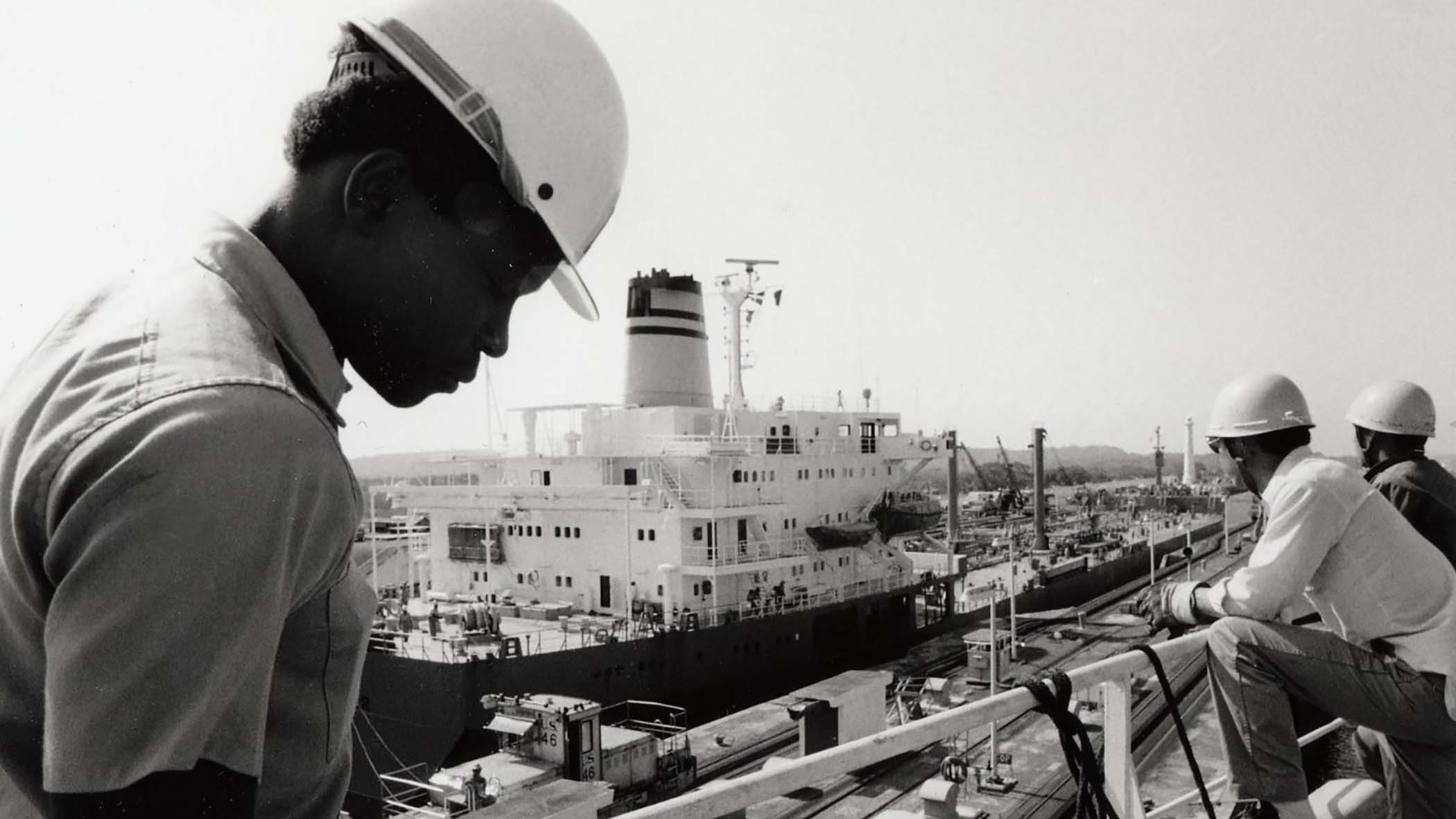
“Why don’t you make a happy film?” Wiseman was asked for a New York Times article in 1970. To which Wiseman replied, “All right, but what’s the subject?” His cynicism was genuine, and he closed out the ’70s with four fairly somber films: Meat (1976), about a meat-packing plant; Canal Zone (1977), about the American military base at the Panama Canal (the same year President Jimmy Carter signed treaties to return the territory and nearly 50 years before Trump started talking about taking it back); Sinai Field Mission (1978), about military bureaucrats in the buffer zone between Egypt and Israel; and Manoeuvre (1979), which follows a tank through NATO war games. But in the 1980s, Wiseman’s films began to get, well, happier.
“There’s the dividing line between reality and illusion,” says a male model to Andy Warhol, explaining the difference between good clothes and bad in Model (1980), about the New York agency Zoli. Wiseman might have expected to document a world of fad diets and vocal fry, but what he found was different: a group of serious and well-spoken people who approached fashion modeling with discipline and pride. They’re dancers and sculptors and actors, artists not airheads. Model was Wiseman’s first documentary primarily about aesthetics, not politics. It was a welcome change of pace.
“When it’s black and white they can fix all the mistakes, when it’s color it’s got to be right,” one model says during a photoshoot. This proved true in Wiseman’s next movie (and first mistake), Seraphita’s Diary (1982). Shot in color and ostensibly “adapted from the diaries and letters of the fashion model Seraphita,” the film, Wiseman’s first fictional work, is a Zelig-like one-woman show. Seraphita plays characters from her own recollections — including Willard, a teenage baseball player; a mustachioed gentleman named Lambert; and, in blackface, a man named “Mr. Juice.” It has not been made legally available by Zipporah Films; one imagines he has chosen to exclude it from the Lincoln Center series. The Last Letter (2002), based in part on a novel by Vasily Grossman, is a one-woman show set in a Jewish ghetto during World War II and has been included in the series; Wiseman’s third fictional film, A Couple (2022), a one-woman show about Sophia Tolstoy, is not being presented.
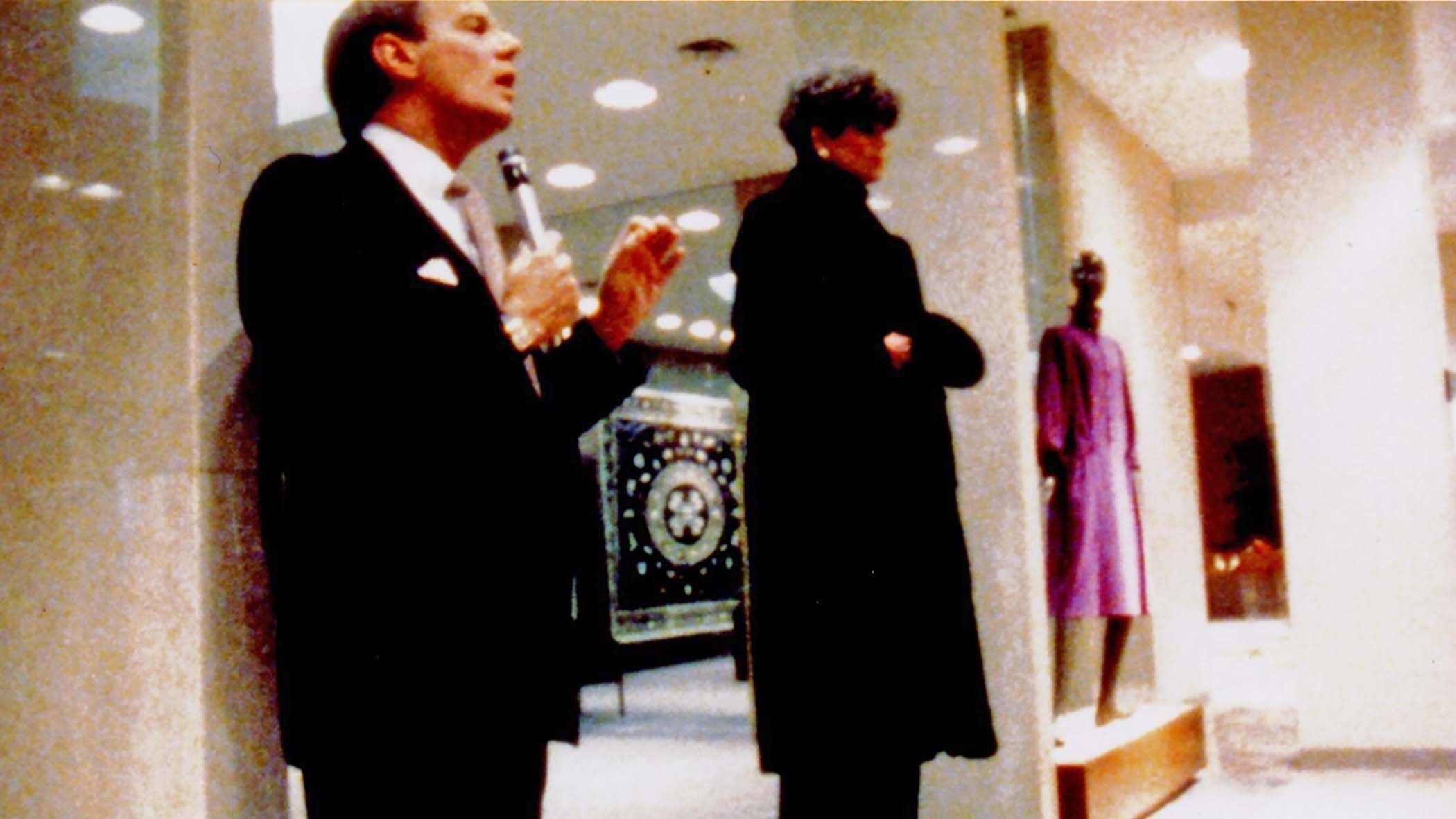
If Seraphita’s Diary did not inspire Wiseman to pivot full-time into fiction, it did give him the confidence to shoot in color. His next documentary, The Store (1983), was shot at the flagship Neiman Marcus store, in Dallas, in full expansive color — next to Bridgewater and the welfare office, it looks a bit like heaven. A logical follow-up to Model, showing us the goods the previous documentary had been selling, The Store is also in line with Wiseman’s earliest documentaries, in the way that the viewer can see the people who run the institutions in his other films.
With The Store, Wiseman had reached the height of his powers; his mature style had developed fully. In film after film, he added patches to his quilt of 20th-century life. The viewer’s interest in them will vary: If you love ballet, see Ballet; if you love theater, see La Comédie-Française. If you love (or hate) skiing, see Aspen. If you are fascinated with end-of-life care, see Near Death (but be warned, it’s six hours long). My favorite Wiseman film is Belfast, Maine, which opens with ships on the Atlantic bathed in sunlight. Later, we see colonial mansions, donuts frying, marshmallow-like bales of hay, huge wheels of cheese, but Wiseman’s emphasis is less picturesque. We spend much of the film’s four hours with Belfast’s aged and infirm. “I take all that’s in here,” a man says as he hands an antique beer stein full of pills to a social worker. An old woman tells her nurse, “I had eight blood clots and I lived. Hoss Cartwright on Bonanza, only had two and he died.” The healthy don’t have it so good either. We see the bandaged and bloody fingers of a woman who cuts sardines at the Beach Hill factory. A forester tells his friend, “You shouldn’t be in the wood business, you love trees too much.” At a prison presentation on HIV, a man warns the inmates, “If it’s warm, slippery, and not yours, don’t touch it. If you see a pile of blood or semen on the floor, don’t play in it.” At a town meeting, a man wearing a bolo tie talks about his fear of young people “hanging out” by the benches near the post office. He recommends the removal of the benches. In an English class, a teacher explains Moby Dick: “‘A commercial fisherman from Nantucket achieves tragic stature.’” So does a commercial fishing town in Belfast, Maine.
From his early muckraking exposés to his longer, looser portraits, Wiseman’s documentaries exposed human decency and human cruelty through the institutions we’ve made for each other. His straightforward, unadorned style gives viewers complete access; taken together, his documentaries are a balanced and compelling portrait of modern life. Were a confused Martian to drop from the sky this month, I’d advise them to spend time at Lincoln Center to get up to speed on us earthlings. At the end of Central Park (1990), Wiseman finds Francis Ford Coppola shooting his segment for the anthology film New York Stories. Coppola is complaining; he had started too late that day, he missed the light. Wiseman didn’t make his first film until he was 36, but he still managed to get plenty of footage, even if some of it was pretty dark. ❖
Gideon Leek is a writer who lives in Brooklyn.