Outmanned and outgunned, the Panthers remained steadfast in their belief that Life, Liberty, and the Pursuit of Happiness is the birthright of all Americans.
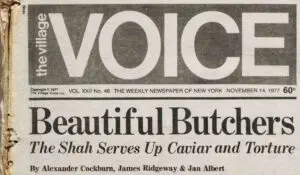
“The social success of the Shah in the galaxy of international despots is the end result of a careful campaign, premised on two vital ingredients: snobbery and cash.”
“Hoffman is a patriot who has fought the Good Fight to waken his fellow Americans to the corruption of their own traditional ideals. Like Tom Paine, he is a classic example of philosophic and poetic dramatist of public Ideals”
“The artiness of Coppola’s aesthetic ultimately becomes an ethic as Pacino, in somber profile, emerges more victim than villain, more a melancholy Dane than a bloody Macbeth.”
“The rumor had Nixon plotting to use election-eve violence as an excuse for massive repression of students and blacks, mass arrests, and suspension of Constitutional guarantees to keep the dissenters behind bars... The rumor was really saying that a Reichstag fire was in the works.”
“Ten years after the American moon landing — 20 since Sputnik 1 — astronauts and space-race lore have receded enough into the past to warrant rethinking. Tom Wolfe tells the early space story as if it were myth, and it is.”
“Bertolucci and Brando conspire magnificently, sometimes awkwardly, to create not just a film about an affair, but the affair itself — an affair which we have the option of resisting or accepting on a gut level, and which like most affairs (and unlike most current films) is better experienced than written about.”