Top

music

Stories


Our Oldest New Waver

The eternal hustler works his gloomy-gus shtick and leaves the hipsters wanting more

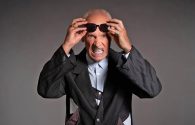
If a Tom Waits album isn't performed live at least once, did it ever exist? His only American show of 2004 came in Seattle October 18, dominated by the new Real Gone, and confirmed that his essential milieu is vaudeville, cabaret, piano bars, juke joints, the circus—any setting where art and shtick clasp hands. Pimping his gloom for the hoax it is, Waits started with "Make It Rain," which goes: "You know the story/Here it comes again/I have no pride/I have no shame/You gotta make it rain." This self-styled depressive's physicality was almost giddy: He bellowed through cupped hands, milked the microphone, and boldfaced another ancient theme ("she's dead, she's so dead, forever dead") so it took a desecrated bow in the Paramount's sacralized proscenium. To invigorate his tediously endless influences, Waits goes by a gut sense of theater, not songcraft. His albums, no matter how much of a home-studio rat he may have become, are squished performances: three-dimensional works that enter Flatland when he records them. No wonder they're impossible to fully absorb, or judge in pop terms. He leaves the hipsters wanting more, which helps him stay current as his peers fade.

Always estimable but never vivid
photo: Henry Diltz
Always estimable but never vivid

Details

Tom Waits
Real Gone
Anti-

Related Content

More About

Like this Story?

Sign up for the Music Newsletter: (Sent out every Thursday) Keep your thumb on the local music scene with music features, additional online music listings and show picks. We'll also send special ticket offers and music promotions available only to our Music Newsletter subscribers.

Privacy Policy

Well, that and rhythms so form-fitting that they frame him like the hat he pulls so hard down his head. He's our Oldest New Waver now, still working variations within the art-funk, retro-future, and "Burundi beat"—Western oppositions that were all the rage when he stopped even vaguely resembling the Eagles or Springsteen. Listen to how the three-note James Brown vamp in "Metropolitan Glide," which became a celebration live, is rendered more atonal than its source: funk as fetish object. Every lope, twinkle, and crunch on Real Gone works in this ethereally raw fashion.

The chief audio archivist at the Paramount was guitarist-banjoist Marc Ribot, back with Waits for the first time in almost two decades, who busted brittle shots of Cuban twist, blues earth, and post-punk zigzag. On the album, Waits records with various musical configurations, making clear that the the obsessive architecting of these clipped harmolodics is his alone. Real Gone substitutes modern vocal loops and turntablisms for the completely deleted piano; that said, there are chain-gang chants in "Don't Go in That Barn," and in "Circus" a reference to the Original Dixieland Jazz Band's 1917 "Livery Stable Blues." Again, the result is a kind of compactness: a guttural groove so tight it helps Waits come off as a giant. Real Gone has been called a protest album, and there's one song that sort of justifies that. (I can't count "Sins of My Father," which goes on for over 10 minutes without turning mythic.) "The Day After Tomorrow" shares its title with a Hollywood disaster pic but is sung from the perspective of a 21-year-old soldier just trying to bring most of himself home. This is the Waits who predates new wave or his Brechtian operas with Robert Wilson: the eternally sentimental and Californian Waits. He told a story in concert about the "cavity search" he was threatened with coming back across the Canadian border. "I floss every day," he said he replied.

But politics involves people, and this time around Waits has settled into a place where everything moves but nothing breathes. It's all gorgeous settings, sonic thrust-and-parry. Take "Table Top Joe," from Alice, which Waits made into a signature piece at the concert. That's a character for him to embody. On Real Gone, the character is Waits: master craftsman of bohemian wang-dang-doodle. He's always estimable but never vivid—not the way, say, that on Has Been actor William Shatner turns the deadbeat-dad monologue "That's Me Trying," penned by Nick Hornby, into breathless drama. Shatner, like Waits, loves to shuck and jive. But Captain Crock is one with the shady characters he plays. He's still hustling. Waits, eternally respected, takes a cue from his theme for HBO's The Wire and stays "Way Down in the Hole." Loving the echoes in his chamber.


Most Popular Stories

Find a Concert


Browse Voice Nation
  • Voice Places

    Voice Places

    Discover restaurants, nightlife, travel, shopping...

  • VOICE Daily Deals

    VOICE Daily Deals

    Get 50 to 90% off every day on restaurants, movies, massages...

  • Best Of

    Best Of...

    More than 10,000 of the BEST things to eat, drink, and experience

  • My Voice Nation

    My Voice Nation

    Join the Village Voice community and get exclusive deals and info

  • Happy Hour

    Happy Hour

    Your local Happy Hour guide at your fingertips

or

Log in or Sign up

Social Connect:

Use your favorite account to access My Voice Nation.


Use your My Voice Nation account to log in:


Forgot password?
or

Sign Up or Log in

Social Connect:

Sign up for My Voice Nation with your preferred network.


Sign up for a My Voice Nation account:


Privacy policy