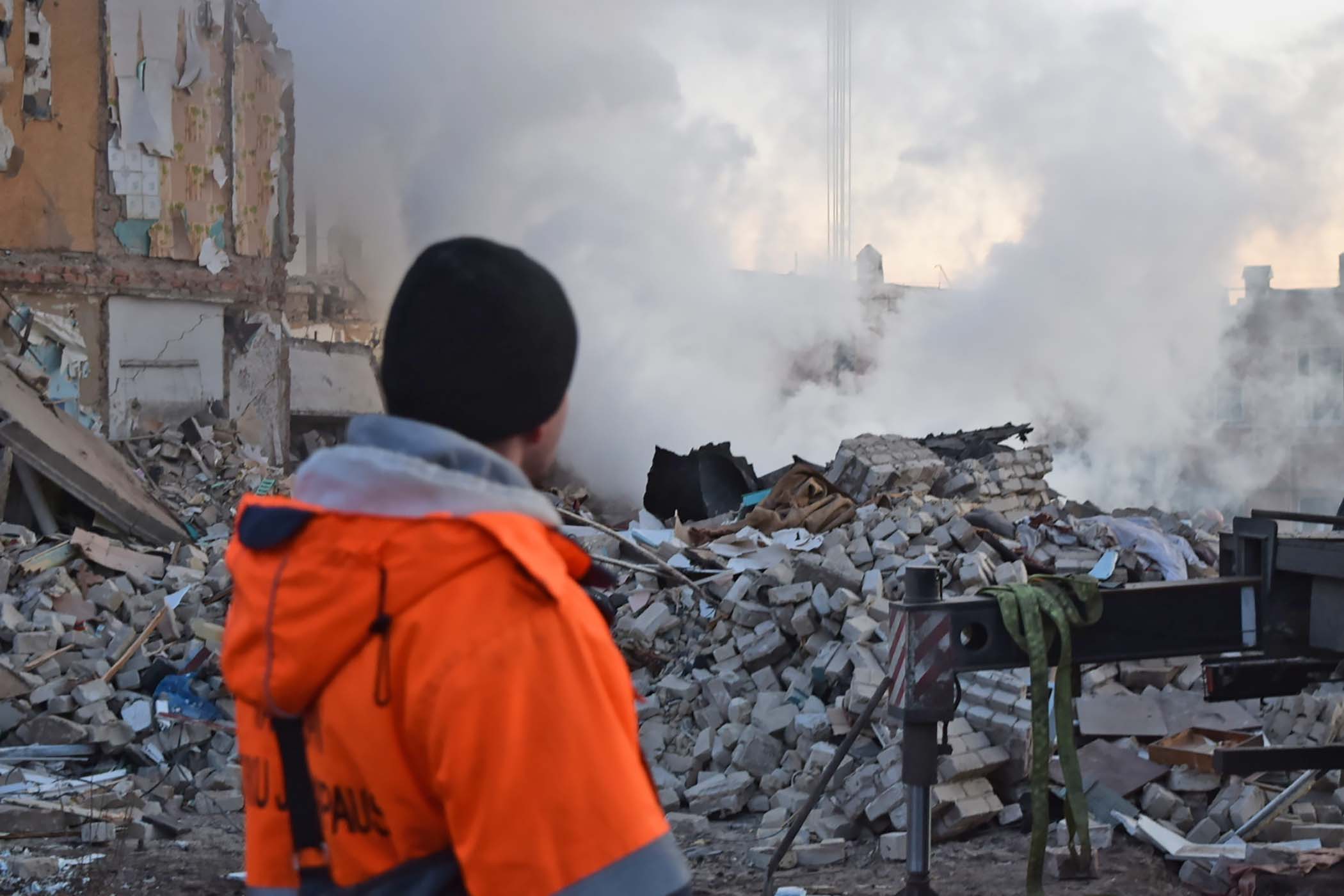




When Donald Trump campaigned for re-election in 2024, he promised that on the first day of his presidency he would end the war that Russia, under Vladimir Putin, had launched against Ukraine in 2022. For some Ukrainians that pledge offered a glimmer of hope — that soon their country would be freed from life under constant bombardment. However, as their nation enters the fourth year of the most savage conflict in Europe since WWII, President Trump has attempted to invert history by casting Ukraine as the aggressor and calling its president, Volodymyr Zelenskyy, “A Dictator without Elections,” although Zelenskyy was elected in 2019 in a landslide deemed free and fair by the international community. Elections in the country have been postponed because of the ongoing war, but Zelenskyy retains, according to Ukrainian polls, a 57% approval rating among his fellow citizens. And it’s not only Ukrainians who disagree with Trump’s assertions. His own former vice president, Mike Pence, posted a forceful rebuke of Trump’s lies on X: “Mr. President, Ukraine did not ‘start’ this war. Russia launched an unprovoked and brutal invasion claiming hundreds of thousands of lives. The Road to Peace must be built on the Truth.”
Even as Trump continues the process of shifting day to night where the facts about the Ukraine war are concerned, the citizens of that beleaguered country soldier on, taking care of each other as well as some of their most threatened inhabitants — the animals in Kyiv Zoo. In the early days of the invasion, as civilians rushed into the vast maze of underground train stations to shelter from attacks and thousands of others fled the city, the zoo’s animals were vulnerable. No one knew where Russian forces might strike next, as they set their sights on capturing Kyiv.
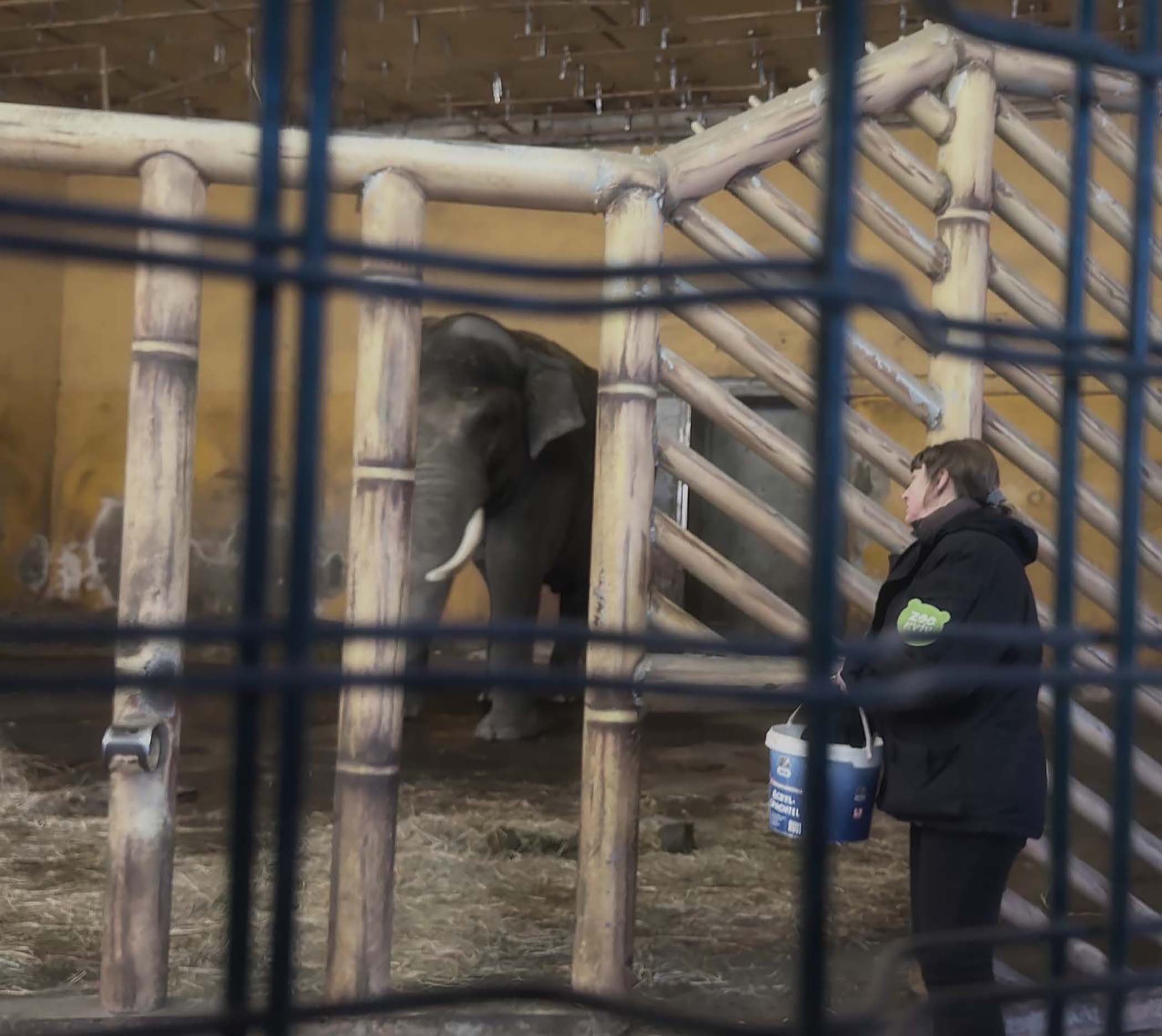
Kyrylo Trantin, general director of the Kyiv Zoo, says, “We started preparing around a month and a half before the war started.” Trantin spoke to me on the grounds of the zoo, explaining that in the weeks leading up to the invasion, staff stocked up on food for the animals and for the people who would be sheltering there, storing frozen meat and fish, fruits and vegetables, and fuel for generators to provide heat and electricity during the cold winter months.
Fears of approaching war had increased toward the end of 2021, when, Trantin says, he and his staff “could feel the tension” as it rose. Humans could prepare for the war and understand what was happening, but animals cannot — explosions and air raid sirens are incomprehensible to them, as well as terrifying. You can explain to humans why they need to try to remain calm, says Trantin. “But you cannot say that to the animals. That’s why we were preparing.”
Within the brutalities of war, Dalila the tiger’s life got better.
Some workers were put in charge of finding additional food for the animals, while others searched for supplies for the staff and their families. Many of the employees and their families moved into the park’s reinforced concrete basement; the zoo was built at the height of the Soviet Union, and the underground exhibits, Trantin explains, are so sturdy they could “withstand a nuclear bomb.”
Living on the zoo’s grounds also helped the caretakers in charge of the animals remain on call in order to comfort them and provide support during the chaos that eventually erupted. One of the animals that needed the most help was Horace, a 19-year-old Indian elephant, who required sedatives to keep him calm. Caretakers such as Viktoriia Sluzhenk, head of the Department of Ungulates (hoofed mammals), slept in the corridor next to Horace’s winter indoor enclosure. When loud, alarming sounds occurred, Horace often reacted very fearfully before he was able to calm down again. “For [Horace], it was a surprise. The war began with a massive shelling. The first thing we had in mind was to come to the zoo, sort things out, and then act. But it turned out that we came and stayed here for two and a half months,” says Sluzhenk, speaking outside Horace’s winter home.
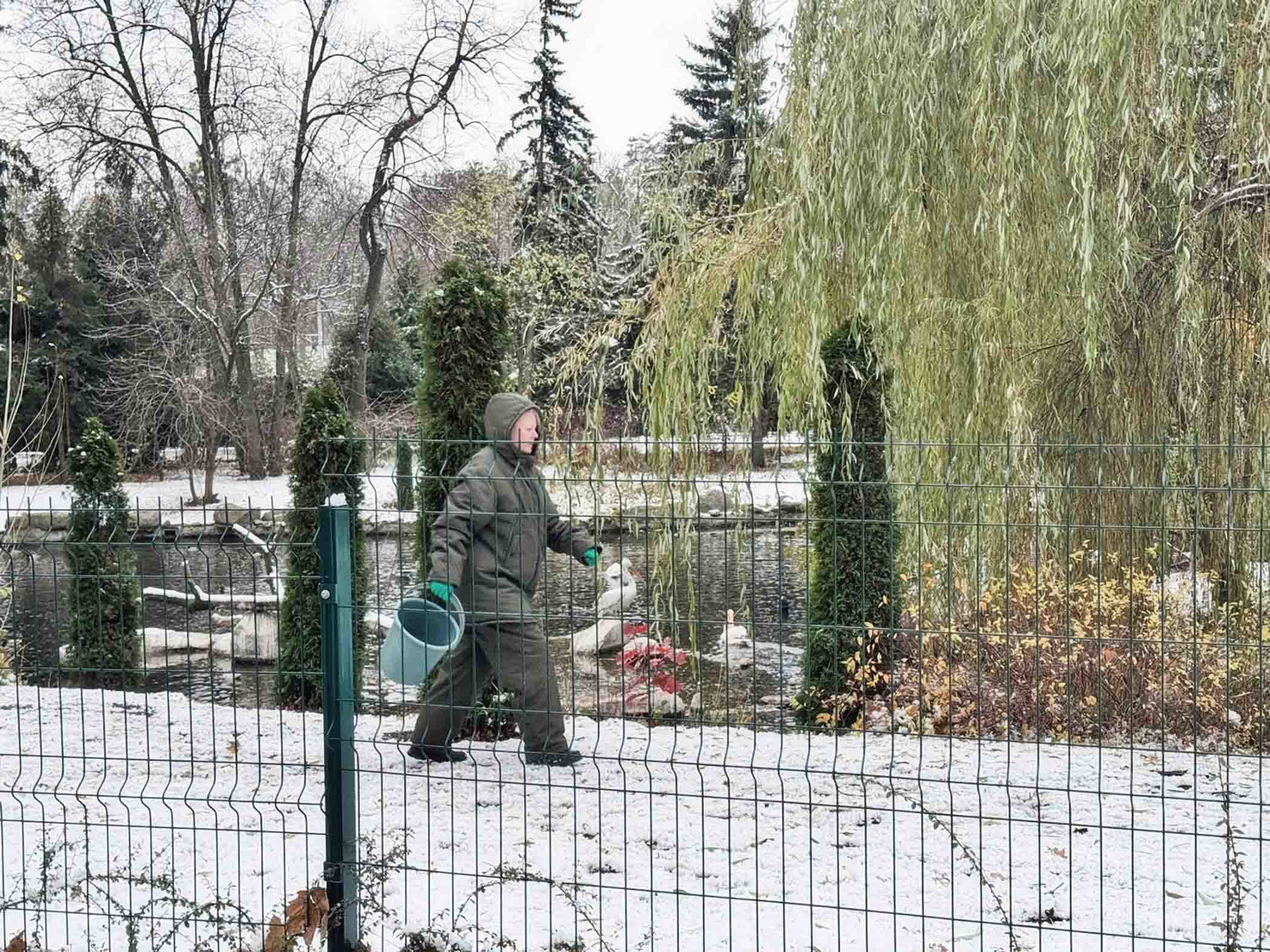
As she spoke about Horace, Sluzhenk walked me into the building where he spends much of the winter. The entrance room is where Sluzhenk sleeps as she cares for him. In the second, much larger room, the elephant stood in a gated enclosure. Upon seeing Sluzhenk enter, Horace walked to where she stood to greet her, reaching his long trunk through the fence to take a green apple sitting in the palm of his caretaker’s hand. After eating the apple, he offered to rub his side against Sluzhenk before walking off to the farthest corner of his space. Ukraine’s winters are harsh, and snow is common well into the spring. Horace spends the coldest days in his heated enclosure.
There is a saying that “An elephant never forgets.” And indeed, older matriarchs show higher survival rates among their calves during periods of drought than do younger mothers, evidence that memories of where to find water and vegetation during hard times are recalled over the years and decades. Living under constant bombardment would seem likely to have a lasting impact on Horace, but Sluzhenk says she has not yet noticed any “traumatic moral consequences” of the attacks on his behavior. His ability to cope with the consequences of war can be largely attributed to the conscientious measures that Sluzhenk and Horace’s other caretakers have taken to ensure his well-being and comfort.
Still, in those early days there were animals at the Kyiv Zoo whose behaviors showed the toll of the conflict. A lemur refused to nurse her baby, leading the veterinarians to feed him themselves, and some of the pelicans began destroying their eggs. Evacuating the animals was not seen as a viable option for the zoo. Trantin explains that it would have taken months to prepare the animals for long hours enclosed in a crate or trailer as they were transported to safer regions of Ukraine or abroad. In Horace’s case, it might have been six months before he could have been evacuated, and the zoo only began preparations for a war at the end of December 2021. There was simply not enough time, and evacuating the animals from the zoo could have been seen by Russia as a symbol of Kyiv’s preparation to fall, something Trantin states they refused to signal to the world. Instead, the zoo became a beacon of light for animals that needed to be evacuated from other regions in Ukraine, and a place of rehabilitation for neglected circus animals and exotic pets in private collections, some of which had spent years in inhumane living conditions at the hands of their owners.
“Everything we do — animal socialization, human adaptation — we want to demonstrate that neither life nor Ukraine can be stopped.”
Over the course of the war, the Kyiv Zoo has adopted 500 animals from around the country. For years, Dalila, a 12-year-old tiger, lived in a menagerie in the eastern Kharkiv region; she was the product of inbreeding, stressed and living in a small enclosure alone. Dalila was evacuated from the menagerie in early April 2022, and when she arrived at the Kyiv Zoo she was underweight, bruised, and bleeding. “The evacuation was chaotic due to the owner’s decisions and the situation in the field,” says Anna Vdovichenko, head of the Predatory Animals Department, as Dalila prowled around outside her ravine-like enclosure. As Vdovichenko spoke, the air raid alarms in Kyiv began sounding, signaling that a Russian attack might soon follow. But Dalila was seemingly unfazed by the warning. When she arrived at the zoo, recalls Vdovichenko, the tiger was “scared of everything, starting with the men who cared for her, loud sounds, sounds of shelling.”
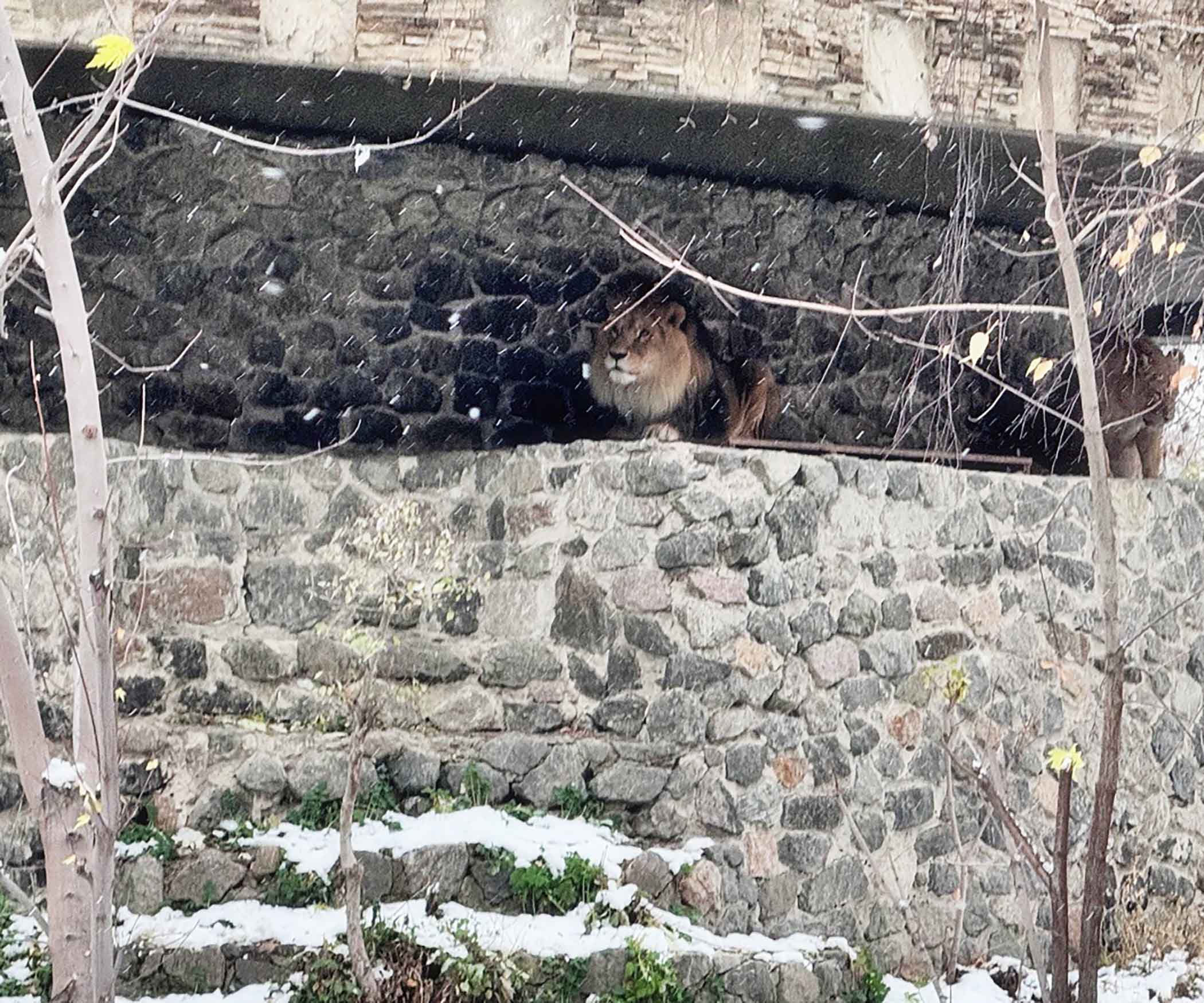
It took caretakers months to prepare Dalila for her outside enclosure, and to gain her trust. Over time she gained 110 pounds, and she has fully integrated into her new home. The lifespan of a tiger is typically 15 years, at most. If Dalila should die soon, there is solace in the knowledge that she would do so under far better conditions. Within the brutalities of war, Dalila’s life got better.

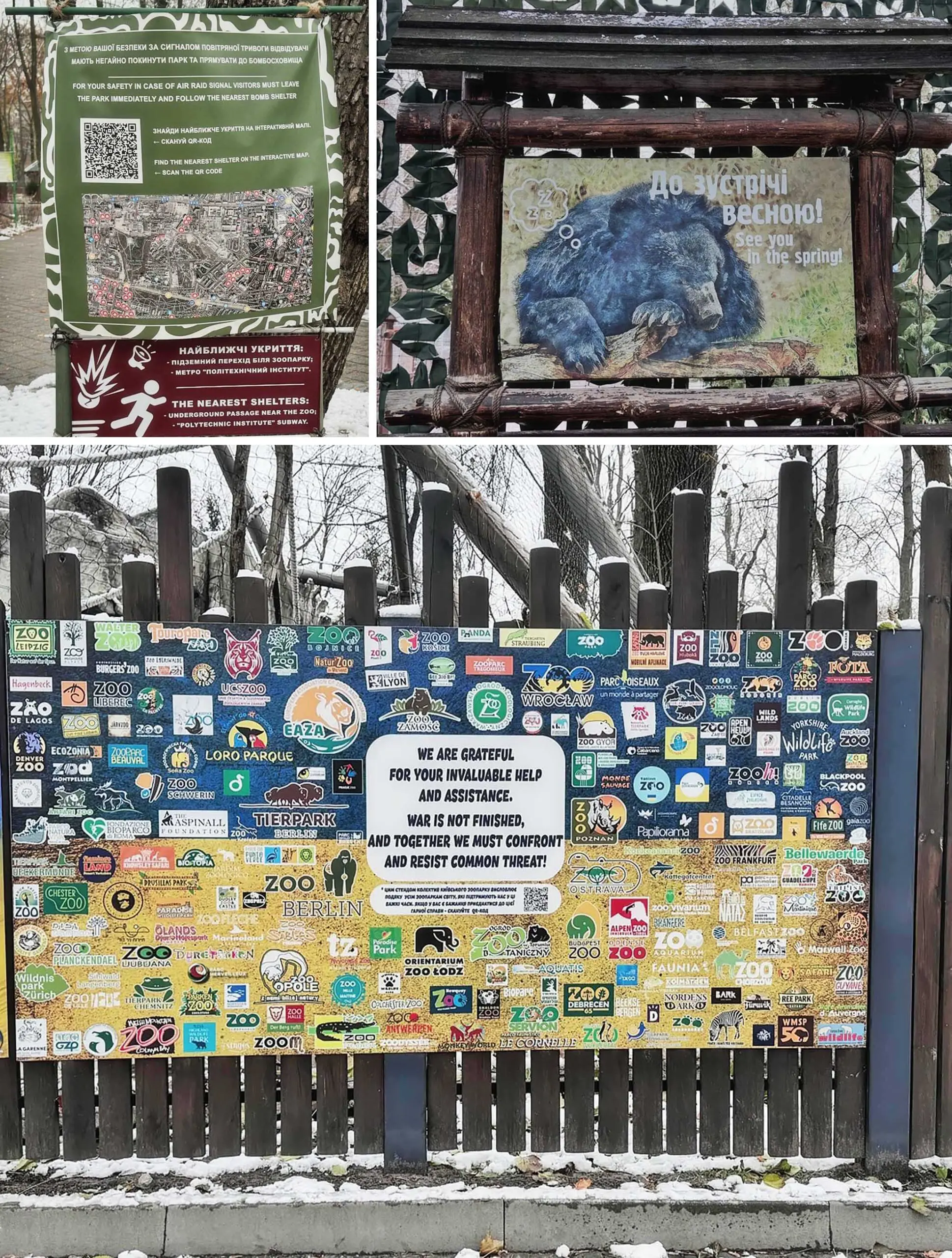
Russia retreated from the Kyiv region in late March 2022, in a move that the Kremlin disingenuously called “an act of goodwill.” Although the war was far from over, the Kyiv Zoo opened its doors to the public, welcoming visitors again. When there are threats of an attack, the staff asks all patrons to leave the zoo and go to the closest shelter, an underground metro station just a few steps from the park’s entrance, while caretakers direct Horace and the other animals back to their enclosures. After the air alert subsides, patrons often return to the zoo. The park is a place for relaxation in Kyiv, say the zoo’s employees, where the stresses of war can be alleviated, if only for a few hours, as patrons stroll past wild animals.
Sometimes the zookeepers will bring small animals, such as snakes and spiders, to hospitals to visit wounded soldiers — unusual animals that the zoo employees say spark curiosity and a desire to communicate with others in order to learn more about them. The zoo also holds classes for internally displaced children and people with disabilities, which teach them about wildlife and the environment; the various programs have so far reached approximately 200,000 people. Trantin states that somewhere around 10% to 15% of those are soldiers, saying, “We have different options for soldiers, it can just be people with psycho-emotional rehabilitation. They get an excursion, or they just come to the zoo with their families.”

“The word ‘freedom,’ and Ukraine’s freedom, are very important for all of us,” says Trantin. “The main priority is freedom in Ukraine. Only from this point we can develop, because you can’t develop in Russia. Everything we do — animal socialization, human adaptation — we want to demonstrate that neither life nor Ukraine can be stopped.” He concludes, “All of our charitable and social projects, and programs for people who suffered, and rescued animals, are our contribution to the future. It’s our inspiration now.” ❖
Anna Conkling is a freelance journalist based in Berlin who, since the beginning of the Russian invasion, has been corresponding with and on the ground interviewing Ukrainian soldiers, students, and civilians, and writing about them for the Voice and other publications.