







A grim, troubling but ultimately wonderful nightmare set to rave music in the desert, Sirāt is a windy road trip on LSD. It’s a road movie made in the arthouse tradition (think The Vanishing meets Michelangelo Antonioni) updated to the modern stage of house music, with ravers dancing their life away while the world crumbles into oblivion around them.
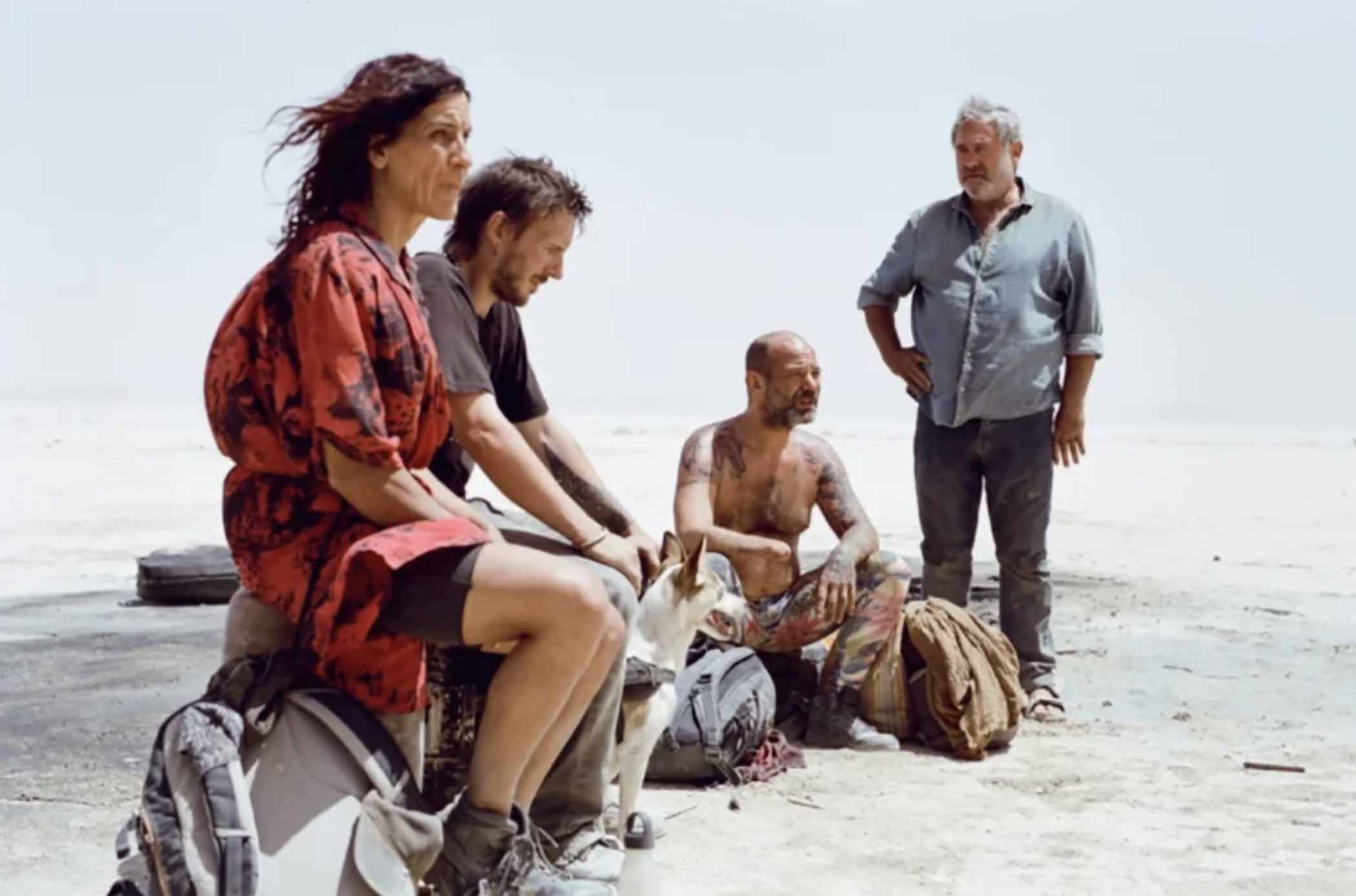
Winning the prestigious Jury Prize at Cannes, the latest from director Oliver Laxe is a trip in more ways than one. It begins in the Moroccan desert, where a bunch of weirdos gather for a rave that makes Berlin nightclubs look like Sunday school sermons. Faces etched with scars, colored hair and shattered limbs, the crowd looks like extras from Mad Max: Fury Road, and the camera twirls around them to the beat of Kangding Ray’s hypnotic score. Among them, Luis (Sergi López) and his young son, Esteban, hand out flyers as they search for their daughter and sister Mar, who is said to be in the area. She’s been missing for five months they scour the desert for someone who might know what happened to her. Like the wife in The Vanishing, or the elusive Monica Vitti in L’Avventura, she’s a MacGuffin that sparks an odyssey of grief that comments on society as a whole — a dystopian community searching for connection but, in an increasingly distant modern culture, is destined to be left with a handful of dust.
Laxe is a student of art cinema — he mixes lucid shots of cars careening through mountain roads in the manner of Abbas Kiarostami with landscape framing out of Antonioni amid a haunting plot recalling The Vanishing to create a hypnotic drug concoction of cinema. You are absolutely glued to the screen when the authorities arrive at the rave, ordering all European citizens to evacuate. Driving a minivan fit for a soccer mom, Luis follows the cars leaving the scene until he sees people breaking the line and heading deeper into the scorching desert, where he reasons his daughter could be hiding. What Luis finds there is more horrifying than he can imagine.
For audiences, Sirāt’s road of suffering is more immersive than substantial, with extremely transporting aesthetics that seem to constantly change in the breeze. What starts out as a bizarre rave quickly morphs into a post-apocalyptic drama, then a body horror shock fest. Suffice it to say, Laxe plays with tones the way a DJ experiments with beats, shifting, sampling, reinventing.
By the time we arrive at the second rave, after a ghastly accident leaves a partier dismembered, we’ve entered The Wages of Fear on acid, as every turn in the road is met with surreal tension accentuated by editor Cristóbal Fernández’s dreamlike dissolves, Mauro Herce’s grainy sunscorched cinematography, and Laxe’s jarring bursts of violence. A war has broken out, and it bleeds into Luis’s journey, causing many of his fellow travelers to perish in the sands. “Is this the end of the world?” one character asks. It might be, but Laxe’s film makes you glad you took the perilous journey to get there. ❖