Top

arts

Stories


'Negritude' Encore!

Revisiting a black art movement.

"Négritude" is a hip-sounding neologism invented by French-speaking writers in Paris in the 1930s. The idea was to create a pan-African identity, resistant to colonialism and informed by sources like surrealism, post-revolutionary Haiti, and Harlem Renaissance writers such as Langston Hughes and W. E. B. Dubois. The word "négre" also came with plenty of pejorative baggage, which meant that Aimé Césaire, who coined the term, and Léopold Sédar Senghor—not just a poet, but later Senegal's first president—were engaging in some good old linguistic reappropriation (well, avant la lettre).

Despite its revolutionary leanings, négritude's reception and embrace, even among black artists and writers, was mixed. Jean-Paul Sartre supported it in an essay, "Black Orpheus," in the introduction to a 1948 poetry anthology edited by Senghor, but Frantz Fanon called the concept simplistic, and Nigerian Nobel Laureate Wole Soyinka described it as a narcissistic and defensive colonialist stance.

Exit Art's Négritude—a scattershot hodgepodge of art, text, film, video, and performance—doesn't take sides. Instead, it approaches the term poetically as an "archipelago" with "many 'islands,' or perspectives." But it also falls into what might be called the proto-exhibition category: not terribly satisfying on its own, but providing the impetus for someone, somewhere, to organize a more comprehensive one. (Particularly since artists and curators like Thelma Golden of the Studio Museum of Harlem have bandied about another, more contemporary-sounding term: Post-Black.)

Négritude is framed as an "experimental multidisciplinary exhibition," which means it's purposefully not comprehensive, and, given the changing lineup of films and video, the show you see might be slightly different than the one I saw. It's got an impressive roster of curators, recruited by Exit Art's Papo Colo: longtime Voice writer Greg Tate; curator Franklin Sirmans; Brazilian filmmaker Tânia Cypriano; and Rose Réjouis, a scholar who co-translated Patrick Chamoiseau's epic novel about colonial Martinique, Texaco (1993).

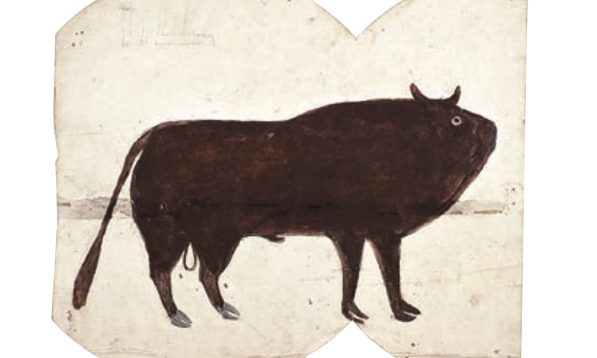
Tate's section is the best: It includes a handful of vibrant works—paintings, mostly—by black outsider artists like Thornton Dial Sr., Lonnie Holley, Purvis Young, and Bessie Harvey. Also in Tate's corner is Xaviera Simmons's low wall of album covers from the '60s, '70s, and '80s: Ashford & Simpson, Cruz and Colon, Peaches & Herb, Roberta Flack. It's also a reminder of Exit Art's great exhibition The LP Show (2001), which offered a similar, if expanded, view of the world through the idiosyncratic classification systems of record collectors.

Cypriano's section features a changing roster of documentary films and videos from Brazil, while Réjouis's includes art objects, a reading by poet Saul Williams, and a musical performance by the group Dallam-Dougou. Sirmans, the best-known curator in the group, phoned this one in with a single offering of modest paintings by Tierney Malone that recall faded street signs. (Although his recent NeoHoodoo show at P.S.1 trawled somewhat similar territory to Négritude: how spiritual and ritual practice in the Americas have been used to address race, gender, slavery, and colonization.)

In many ways, Négritude, like many shows at Exit Art, takes you back to the early '90s and that era's concept-heavy exhibitions revolving around identity politics and generous doses of installation art. But with one essential difference: the ambivalence of the present. Is négritude viable or historically spent? The show at Exit Art is freewheeling (and unrigorous) enough to support either view. Literature, for its part, has already spawned a new term for writing of the African diaspora: "migritude." Maybe next year will bring us Migritude, the exhibition.

 
  • gerardo torres 06/24/2009 4:22:00 PM

    It is very revelaing about Papo Colo and his relationship with Puerto Rico that the most important "negrista" in the Spanish-speaking world is not includen in this exhibition. Luis Pales Matos created the most extensive and profound works in this artistic movement in ths Spanish-speaking world. But Colo has always been known for placing oportunism and self serving propaganda above artistic considerations.


Most Popular Stories

for free stuff, theater info & more!

Find A Coupon

Popular Coupons


Browse Voice Nation
  • Voice Places

    Voice Places

    Discover restaurants, nightlife, travel, shopping...

  • VOICE Daily Deals

    VOICE Daily Deals

    Get 50 to 90% off every day on restaurants, movies, massages...

  • Best Of

    Best Of...

    More than 10,000 of the BEST things to eat, drink, and experience

  • My Voice Nation

    My Voice Nation

    Join the Village Voice community and get exclusive deals and info

  • Happy Hour

    Happy Hour

    Your local Happy Hour guide at your fingertips

or

Log in or Sign up

Social Connect:

Use your favorite account to access My Voice Nation.


Use your My Voice Nation account to log in:


Forgot password?
or

Sign Up or Log in

Social Connect:

Sign up for My Voice Nation with your preferred network.


Sign up for a My Voice Nation account:


Privacy policy