Top

arts

Stories


Andy Warhol's Piss Paintings Aren't Exactly Number One

The brand plays on at the Brooklyn Museum

The figure of Andy Warhol, like Jesus, has come to mean many different things to lots of people. An empty screen onto which generations of arty folks project their own desires, the gee-whiz shade that was Warhol retains a religiously iconic power for an otherwise skeptical sweep of culturati that spans both Harvard deans and devotees of The Rachel Zoe Project.

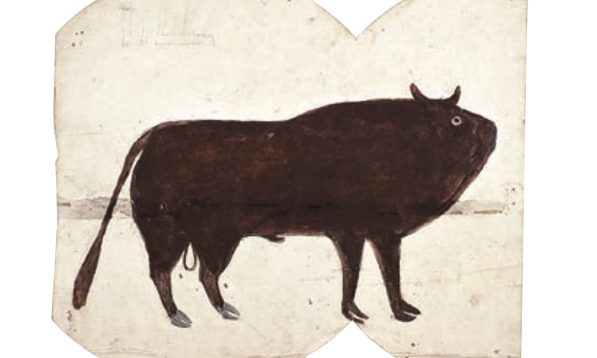
Art whiz? Oxidation Painting (in 12 parts), 1978
The Andy Warhol Foundation for the Visual Arts/Artists Rights Society (ARS), New York
Art whiz? Oxidation Painting (in 12 parts), 1978

Details

Andy Warhol: 'The Last Decade'
The Brooklyn Museum
200 Eastern Parkway, Brooklyn
718-638-5000

Related Content

More About

Warhol's position as the patron saint of art celebrity became gospel following his death in 1987, just as his mass appeal was beginning to wear away like a faded "My Boss Is a Jewish Carpenter" T-shirt. For every rerun of his A&E Biography and Love Boat cameo pulled from TV, loads of sycophantic articles and record auction sales took its place. What the faithful extolled then has become art-world catechism today. There's Warhol's forgiving celebration of superficiality as "the most brilliant mirror of our times," his conflation of radical and blue-chip art, and the rock-sure faith in his escalating prices. Put in strictly Catholic terms, that is the Father, Son, and Holy Ghost of the Warhol cult. It's enough to make one wish out loud for a glimpse of Martin Luther.

If early Warhol—a period, according to academics, that begins with the Campbell Soup cans and ends with his 1968 shooting by Valerie Solanas—embodied Stuart Davis's definition of the new American artist as "a cool Spectator-Reporter at an Arena of Hot Events," then the later version was characterized by Andy's tabloid affair with conventional bourgeois kitsch. Warhol ditched his thrilling electric chairs and trenchant Marilyns along with painting ("so boring") to engage in the following square pastimes: making perversely monotonous movies, starting a gossip magazine (Interview), churning out portraits of Imelda Marcos and Nancy Reagan (among other commissions), and generally whoring himself out in demonstration of something he called "business art" (his coinage lives on in the auction-house shenanigans of Damien Hirst). While at it, Warhol nearly torpedoed the chance of anyone ever again taking him seriously as an artist. Once the juggernaut of a culture of promotion, Warhol was suddenly unable to distinguish between good and bad products to hype. For an idea of how sleazy he looked then: picture Elton John singing at Rush Limbaugh's inaugural.

One example of Warhol misplacing his cool compass was his decision to join middlebrow champion LeRoy Neiman in Los Angeles for a show underwritten by Hugh Hefner. Another career slip-up: his 1979 Whitney Museum display of celebrity portraits, which was universally panned. Still a third was an ill-timed exhibition of dollar-sign paintings at Leo Castelli in 1982. The press had a field day. The critic Stuart Morgan, writing in Artforum, served him up on a pike: "In recent years his shows have been increasingly disappointing. . . . Warhol's work has always been empty, but now it seems empty-headed." The prince of Pop had become the emperor of kitsch. For those who choose to properly recall his last years, the irony was perfect.

In the 1980s, Warhol became a parvenu in an art world that he had previously conquered. A famous painter and B-list celebrity who lacked the universal visibility of "real" stars (he was too swishy and opaque to have a beer with, to use W.'s popularity metric), Warhol knew that the tide had turned against him where it mattered—downtown, among the Bowery clubs and the neo-expressionist cool kids. "I wasn't creative since I was shot," Warhol confided with mangled grammar to his diary at the end of the '70s. A few years later, after returning from visiting museums abroad, he was ready to agree with his harshest critics: "I might be well known, but I'm sure not turning out good work. I'm not turning out anything."

Back in New York but no nearer a breakthrough, Warhol had studio minions relieve themselves on prepared canvases. Slathered previously with metallic pigment, these "Piss Paintings"—or "Oxidation Paintings," as they are primly labeled at the Brooklyn Museum's current show, "Andy Warhol: The Last Decade"—energized the artist for another decade of hit-and-miss activity. Shallow puns on Jackson Pollock's drip paintings—and Jack the Dripper's legendary habit of letting go into Peggy Guggenheim's fireplace—these and other late canvases were mostly condemned to exhibition in Europe during his lifetime. "The Last Decade" makes a case for their parity with Warhol's seminal pop works. In a phrase: not even close.

Billing itself, quite rightly, as the first major Warhol museum show in New York in a decade—local gallery shows, on the other hand, are too numerous to count—the current hagiography is predictably full of superlatives orotundly mouthed by the show's otherwise eminent curator (Joe Ketner). Warhol's late "great artistic developments" include collaborations with Jean-Michel Basquiat ("a tour de force of figurative painting"), hand-stenciled "Black & White Ads" (sourced from newsprint, they mostly eschew "his extraordinary touch"), and a spiritually dodgy "Last Supper" series ("the most ambitious body of religious paintings of the 20th century"). But this is par for the course for Warhol appreciation, where grade inflation often resembles the old subprime market.

A firsthand look at the "Piss Paintings" makes one thing perfectly clear: These one-liners turn boorish after a single viewing. Warhol's collaborations with Basquiat and a clueless Francesco Clemente are a train wreck that hardly invites rubbernecking. And Andy's "Last Supper" paintings, rather than works of spiritual reckoning, represent this artist finding—according to an assistant—"just another button to push." Warhol's "Rorschach Paintings," on the other hand, invite greater scrutiny—if not exactly for their painterliness, then for the artist's frightening magnification of a familiar symbol (for those without benefit of an analyst, Rorschach tests are normally card-size). Another set of late paintings, the "Camouflage" series, deploys a similar strategy with contrasting Matisse-like color schemes. These paintings succeed because they feature the disappearing act that sustained Warhol throughout his entire career: his Oz-like ability to hide his utter affectlessness behind an equally empty front.

 
  • Gregory Kirschenbaum 10/04/2010 11:26:00 PM

    I am the current oxidation artist of our time. It is interesting to me that 1 or 2 andy warhol pantings in piss is all the artworld seems to consider. You are invited to my upcoming show entitled, "CIVIL RIGHTS" in Tribeca to review and comment on the current oxidation paintings I am unveiling. I have painted more than 2,000 canvas paintings in oxidized metal. Perhaps you are already familiar with my work. Please go to: www.aspiretogreatness.com for full show details. Thank you, Gregory Kirschenbaum, Artist

  • Robert 10/04/2010 11:10:00 AM

    "Warhol knew that the tide had turned against him where it mattered—downtown, among the Bowery clubs and the neo-expressionist cool kids." Warhol was not at all rejected by the neo-Expressionists. As you mention, he collaborated with Clemente and Basquiat. Julian Schnabel has an essay in the show's catalog, and portrayed him quite sympathetically in his film, "Basquiat." And the color in the Camouflage paintings is utterly unlike Matisse's: comparing it with Frank Stella's would be more accurate, and not nearly so complimentary.

  • Robert 10/04/2010 11:10:00 AM

    "Warhol knew that the tide had turned against him where it mattered—downtown, among the Bowery clubs and the neo-expressionist cool kids." Warhol was not at all rejected by the neo-Expressionists. As you mention, he collaborated with Clemente and Basquiat. Julian Schnabel has an essay in the show's catalog, and portrayed him quite sympathetically in his film, "Basquiat." And the color in the Camouflage paintings is utterly unlike Matisse's: comparing it with Frank Stella's would be more accurate, and not nearly so complimentary.

  • Stewart Moore 09/22/2010 1:13:00 AM

    Was good when he wasn't being greedy...in other words for about 15 minutes in his lifetime.

  • supermarky 09/12/2010 5:44:00 PM

    1979 show at whitney "universally panned" was awesome, and surprised many a jaded aesthete figuring to see nothing remarkable from AW. "Bad" was also universally panned, killing the directing career of Jed Johnson. so much for critics!

  • kitschup 09/07/2010 8:47:00 PM

    The disparaging tone of the article is inexcusable, considering the major role/impact Warhol had had on society(direct or indirect) during his lifetime. My question for Ms.Viveros-Faune is: Who today is alike Andy Warhol?....anybody even close.....

  • kitschup 09/07/2010 8:27:00 PM

    The disparaging tone of this article is inexcusable- eventhough the author does make several valid points.

  • Paul Winston 09/07/2010 8:15:00 AM

    Is this the Village Voice 2010 or Hilton Kramer writing in the New Criterion, circa 1990? Haven't we settled the question of Warhol's genius — what? — 10, 20 years ago? Viveros-Faune only proves she has no business writing about art.

  • Jim VanKirk 09/03/2010 5:57:00 AM

    Warhol's penchant for letting others do his thinking led over time to his having no thoughts of his own. I believe you're right that in the end he recognized his own artistic shortcomings and the NY Academy is proof. JVK


Most Popular Stories

for free stuff, theater info & more!

Find A Coupon

Popular Coupons


Browse Voice Nation
  • Voice Places

    Voice Places

    Discover restaurants, nightlife, travel, shopping...

  • VOICE Daily Deals

    VOICE Daily Deals

    Get 50 to 90% off every day on restaurants, movies, massages...

  • Best Of

    Best Of...

    More than 10,000 of the BEST things to eat, drink, and experience

  • My Voice Nation

    My Voice Nation

    Join the Village Voice community and get exclusive deals and info

  • Happy Hour

    Happy Hour

    Your local Happy Hour guide at your fingertips

or

Log in or Sign up

Social Connect:

Use your favorite account to access My Voice Nation.


Use your My Voice Nation account to log in:


Forgot password?
or

Sign Up or Log in

Social Connect:

Sign up for My Voice Nation with your preferred network.


Sign up for a My Voice Nation account:


Privacy policy