Top

arts

Stories


The Brooklyn Museum Hosts 'Hide/Seek: Difference and Desire in American Portraiture'

A show that made 'em mad in D.C. comes to town

As everyone knows, there is a world of difference between looking and seeing. When free-thought opponents like the Catholic bishop of Brooklyn (Nicholas A. DiMarzio) and New York Post columnist Andrea Peyser first clapped eyes on images of same-sex marriage in New York, they saw red. Now that last winter's flapdoodle over artist David Wojnarowicz's footage of insects crawling over a plastic crucifix has hit the Brooklyn Museum, these professional scolds have claimed a new outrage: The Anty-Christ!

Pier review: George Wesley Bellow's Riverfront No. 1, 1915
Brooklyn Museum/Columbus Museum of Art
Pier review: George Wesley Bellow's Riverfront No. 1, 1915

Tabloid objections aside, a proper look at the Brooklyn Museum's "Hide/Seek: Difference and Desire in American Portraiture" proves a revelatory experience. A show capable of changing the way one sees the insistently controversial combination of art and sex, its century of paintings, photographs, and videos tell a story that is enlightening, compelling, and resolutely generous. "Hide/Seek" is the first major exhibition to explore homosexuality in American art. The fact that it looks to portraiture—a medium dedicated to revelation, sometimes against the sitter's will—to articulate a history (and even an art history) of sexual desire lends the show's genuinely complex arguments some plainspoken readability.

Featuring, in the words of Jonathan Katz, one of the show's curators (the other is David C. Ward), "straight artists representing gay figures, gay artists representing gay figures, and even straight artists representing straight figures," "Hide/Seek" takes a decidedly inclusive tack in weaving a visual argument against the essentialisms of both the cultural Right and Left. Not a show about the fethishism of sexual or gender differences, this grown-up display literally illustrates how late 19th-century homosexual behavior evolved into 20th-century sexual identity and then into legally sanctioned conduct in the 21st. On the other hand, "Hide/Seek"—a collective sentimental and sexual education in some 100 canonical artworks—uncovers plenty of visual proof of a proscribed (and even policed) eroticism that, we of course learn, has always largely hidden in plain sight.

The presence of "Hide/Seek" at the Brooklyn Museum is, in a phrase, as miraculous as Viagra. A museum outing that nearly folded under the weight of partisan zealotry at Washington, D.C.'s National Portrait GalleryG. Wayne Clough, the institution's director, pulled Wojnarowicz's remarkably inoffensive video, A Fire in My Belly, to placate Catholic League bigots and Republican opportunists—the show limped along only after receiving an unexpected groundswell of liberal support. Currently reconstituted piece by piece (minus six difficult loans whose absences are indicated by wall labels, like at a problem wedding), "Hide/Seek" owes its proper second life to the bullheadedness of the one New York institution that has historically embraced controversy where others quailed. To say that the Brooklyn Museum has been courageous here is an understatement. One thing is clear: Without this institution's dogged insistence, "Hide/Seek" would have found its Waterloo deep inside the congressional Beltway.

Because depictions of homosexual desire do not call up the same rep-tie paranoia in New York as they do in our nation's capital, public reception should be way different this time (barring soapbox divas like DiMarzio and Peyser). After all, exhibitions about art's racy relations to sex have been a dime a dozen since art historians built cottage industries from Picasso's cow-eyed mistresses and Dalí's perversely baroque kinks. In these cases, as in "Hide/Seek," sexuality proves not a private matter, but instead an artistic trope governing the means of representation. The fact that sex is deliberately visible in such artworks is part of their inherent gaminess. Its equally purposeful and historically necessary masking—like a Victoria's Secret satin thong on a runway model, for a breeder—only manages to accentuate the, ahem, rub.

So it appears in many artworks featured in "Hide/Seek." Starting with a best-selling 1917 lithograph by George Bellows depicting a barely veiled gay encounter in a male bathhouse (the "trade" sports a visible stiffening in the towel region, while the "queer" stares back leeringly) and progressing through to Grant Woods's rueful 1930 oil painting Arnold Comes of Age (the picture depicts a swallow-breasted, wistful youth with his back turned to two disporting nakedmale figures), gay sexual tension in American art is shown to have undergone a constant adjustment of cloaking and reveal. In the curators' words, these and other works were "structured so that the viewer can enjoy the code, not understand the code, choose not to understand the code, or pretend not to understand [it]." A similar secret language might explain Brooklyn's miles of St. Sebastian garden statuary—or, alternately, the chests full of obscene corkscrew pendants parading around street festivals like San Gennaro.

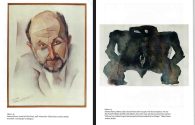
More transparent assertions of sexual identity crop up in Romaine Brooks's 1923 painted Self-Portrait, in which she is depicted as a masculinized wraith; Paul Cadmus's 1948 oil-on-canvas fantasia of pansexual free love (titled What I Believe, after E.M. Forster's book of the same name); and Larry Rivers's full-length 1954 portrait of a nude, vamping Frank O'Hara—the poet's hands-on-head pose mirrors Botticelli's Venus. But a darker mood prevails as the show's galleries reach the years defined by the AIDS crisis of the 1980s. A period illustrated in "Hide/Seek" primarily by the lacerating directness of photography, its beleaguered account includes pictures by Peter Hujar, Nan Goldin, Robert Mapplethorpe, Mark Morrisroe, Wojnarowicz, and AA Bronson. Of these, two pictures stand out for special scrutiny: Mapplethorpe's darkly disembodied head of Roy Cohn, the staged "just image" of Judases and gay Republicans everywhere, and Bronson's portrait of the artist Felix Partz, wasted beyond words by AIDS.

1 | 2 | Next Page >>


Most Popular Stories

for free stuff, theater info & more!

Browse Voice Nation
  • Voice Places

    Voice Places

    Discover restaurants, nightlife, travel, shopping...

  • VOICE Daily Deals

    VOICE Daily Deals

    Get 50 to 90% off every day on restaurants, movies, massages...

  • Best Of

    Best Of...

    More than 10,000 of the BEST things to eat, drink, and experience

  • My Voice Nation

    My Voice Nation

    Join the Village Voice community and get exclusive deals and info

  • Happy Hour

    Happy Hour

    Your local Happy Hour guide at your fingertips

or

Log in or Sign up

Social Connect:

Use your favorite account to access My Voice Nation.


Use your My Voice Nation account to log in:


Forgot password?
or

Sign Up or Log in

Social Connect:

Sign up for My Voice Nation with your preferred network.


Sign up for a My Voice Nation account:


Privacy policy