Top

film

Stories


Katyn's True Lies

Revisiting the Katyn cover-up, Poland's great chronicler gets personal, but not personal enough

There are directors like John Ford and Alexander Dovzhenko, national bards singing the tales of the tribe, and others like Charles Chaplin and Frank Capra, people's artists talkin' straight to the folks. Senegal's late Ousmane Sembene was both—so is Andrzej Wajda. With his new film Katyn, Poland's greatest filmmaker caps his career with the story he waited most of his life to tell.

Wajda pointedly titled his first, quasi-autobiographical feature A Generation (1954) and has consistently dramatized critical junctures in 20th-century Polish history, turning them into movies that have aspired to be or—like his masterpieces Kanal (1957), Ashes and Diamonds (1958), and Man of Marble (1977)—actually have been political events. Katyn, which sold millions of tickets and provoked a national debate in Poland, addresses a once-taboo, still-traumatic subject: the 1940 liquidation of some 15,000 Polish military officers, carried out on Stalin's orders and consequently blamed on the Nazis.

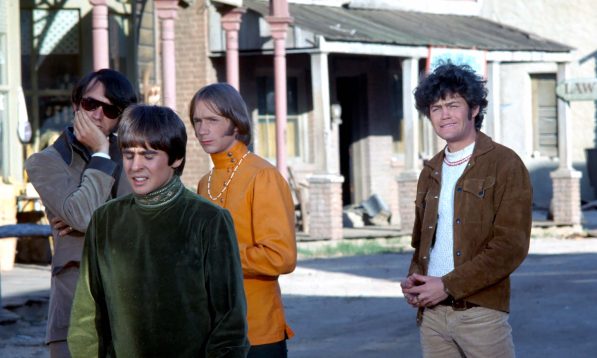
Dressed for the period in Katyn
Koch Lorber Films
Dressed for the period in Katyn

Details

Katyn
Directed by Andrzej Wajda
Koch Lorber Films
Film Forum
February 18 through March 3

Related Content

More About

The Katyn massacre was grisly; the cover-up, enforced throughout the Cold War and the life of the Soviet Union, was additionally atrocious in that it founded the new Polish state on an obvious lie. For the 82-year-old director, the bloodbath has an added significance—his father was among the victims. This intense personal investment may account for the movie's uneven quality: While never less than fascinating, Katyn alternates between scenes of tremendous power and sequences most kindly described as dutiful. It's as if the artist is never certain whether he is making this movie for himself, his father, or the entire nation.

Based on a novel by Andrzej Mularczyk, a veteran screenwriter of Wajda's generation, Katyn has an anthology quality. The opening scene, set on a Kraków bridge over the Vistula, tops a similar one in Agnieszka Holland's Europa Europa (and another in Schindler's List), with a panicky civilian mob in flight from the German advance running headlong into another crowd fleeing the Russians. As the action moves from bloody field hospital to fetid POW camp to Kraków's Jagiellonian University (where, in another set piece, the Nazis arrest the entire faculty), the filmmaking is robust. Wajda conducts the masses, orchestrates crane shots, and scatters the landscape with highly charged symbols. No movie has ever made the analogy between Hitlerism and Stalinism so visceral.

Katyn is directed for maximum gravitas, but often trips over the script's clumsy transitions. Turning from wide-screen spectacle to close-up characterization, the direction falters, despite the facility of the actors. Initially, it seems as if the film's protagonist will be Anna (Maja Ostaszewska), the willowy, sorrowful wife of a captured Polish officer. Wajda, however, has something more epic in mind. The narrative is complicated and elliptical. Jumping from one historical juncture to the next—the German discovery of the Katyn killing field, the Red Army liberation of Poland, the coalescing of a new Polish state around the insistence that Katyn was a Nazi crime—the movie staggers under its shifting cast of characters, stiffly deployed at key moments. A flurry of reaction shots serves to squander the can't-miss moment when a young child mistakes a uniformed Katyn survivor for her father.

History is the subject. As in Man of Marble, Wajda is particularly adroit at integrating archival footage. The victorious Soviets produce a propaganda film about Katyn that, complete with exhumed bodies and presiding priests, is virtually identical to the Nazi film made two years before. (Shocking as this is, one has to wonder if Wajda didn't tweak the newsreels to make them so absolutely alike.) Wajda's most provocative notion is that Katyn was a process that bore its poison fruit in war's aftermath—families divided and individuals broken by the new regime's institutionalized doublethink. In a bit of prophetic direct address early in the movie, a Polish general tells his fellow captives (and the camera) that they must survive: "Without you, there will be no free Poland."

They didn't, and there wasn't. Driven mad by the boisterous Soviet propaganda blasting out of the public address system, a Polish officer who miraculously eluded the massacre walks drunkenly out into the snowy street and shoots himself; a beautiful young partisan turns Antigone, sacrificing her future in a hopeless attempt to have her brother's tombstone dated "1940" (instead of the Soviet-sanctioned "1941"). Earlier, she had argued with her sister, a newly minted Party member who maintains that resistance is futile and, in another pointed bit of direct address, wrongly informs the world that "there will never be a free Poland."

Late in Katyn, Anna receives her husband's diary—a device allowing Wajda to restage the procedure of mass murder in harrowing detail. Although the entire movie is a build-up to this grisly 10-minute sequence, it's a factor of Wajda's mastery that nothing really prepares us for its single-minded intensity. It seems remarkably self-reflexive that the filmmaker understands that his oeuvre may culminate in this Guernica set-piece; the movie's final image is that of a truck not quite pushing the earth over a dead hand entwined in a rosary. Katyn, however, is not a confession.

A teenager in People's Poland and then the most public of public artists, Wajda had to live with Katyn every day. Albeit indifferently staged and poorly written, the movie's key postwar scene has a boy, applying for art school, refusing to alter his application so as not to conceal his father's death at Katyn; the twist is that the stern young administrator urging his accommodation to the new reality herself lost a brother at Katyn. Wajda is both characters. Making Katyn allowed him to imagine his father's murder without telling us what it was like for him to live with it.

jhoberman@villagevoice.com

 
  • George Szreniawski 02/18/2009 2:36:00 PM

    I had a chance to see this movie in Warsaw October 2007, since that more than 3 million people attended projections, mostly in Poland and now all over the world. If "The Pianist" was mainly a story about one man, Katyn is a story about 20 thousand Polish officers (POW's) murdered by Russians. Regarded as Wajda�s most important and long-awaited film, �Katyn� uses stories from authentic diaries and letters found in the Katyn graves to tell the fate of four fictional officers and their families. Through them, it shows the predicament of Poland, attacked from the west by the Nazis on Sept.1, 1939 and on Sept. 17 by the Soviets from the east under a secret deal between Stalin and Hitler. The news of the tragedy was revealed only in the spring of 1943 after the Nazis had invaded the Soviet Union and discovered the mass graves; however Soviet propaganda blamed the deaths on Adolf Hitler and punished anyone speaking the truth with harsh prison terms. In 1990, after being kept secret by the Cold War for almost another sixty years, the Kremlin officially confessed that Dictator Joseph Stalin's secret police were responsible for the crime. In addition to featuring a top Polish cast including Maja Ostaszewska, Artur Zmijewski and Andrzej Chyra, the cinematographer is award-winning Pawel Edelman (�Ray,� �All The King�s Men,� �The Pianist,� �Oliver Twist�) and the music is by the world-famous composer Krzysztof Penderecki. Great movie by great director Andrzej Wajda.


Find A Film

for free stuff, film info & more!

Find A Coupon

Popular Coupons

Box Office

  1. Chronicle (2012/ I), 22.0 mil, 22.0 mil
  2. The Woman in Black, 20.9 mil, 20.9 mil
  3. The Grey, 9.3 mil, 34.6 mil
  4. Big Miracle, 7.8 mil, 7.8 mil
  5. Underworld: Awakening, 5.5 mil, 54.2 mil
  6. One for the Money, 5.2 mil, 19.6 mil
  7. Red Tails, 4.7 mil, 41.1 mil
  8. The Descendants, 4.6 mil, 65.5 mil
  9. Man on a Ledge, 4.4 mil, 14.6 mil
  10. Extremely Loud & Incredibly Close, 3.8 mil, 26.7 mil
Movie Title, Weekly Earnings, Total Earnings

Trailers

Browse Voice Nation
  • Voice Places

    Voice Places

    Discover restaurants, nightlife, travel, shopping...

  • VOICE Daily Deals

    VOICE Daily Deals

    Get 50 to 90% off every day on restaurants, movies, massages...

  • Best Of

    Best Of...

    More than 10,000 of the BEST things to eat, drink, and experience

  • My Voice Nation

    My Voice Nation

    Join the Village Voice community and get exclusive deals and info

  • Happy Hour

    Happy Hour

    Your local Happy Hour guide at your fingertips

or

Log in or Sign up

Social Connect:

Use your favorite account to access My Voice Nation.


Use your My Voice Nation account to log in:


Forgot password?
or

Sign Up or Log in

Social Connect:

Sign up for My Voice Nation with your preferred network.


Sign up for a My Voice Nation account:


Privacy policy