Top

film

Stories


'The Groundbreaking Bill Gunn' at BAM

He should have been a star

Bill Gunn died, aged 59, in April of 1989, the day before his play The Forbidden City premiered at the Public Theater, and months before the flashpoint of Spike Lee's Do the Right Thing.

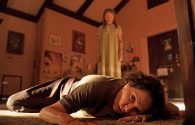
Screaming good: Ganja & Hess
© Kelly-Jordan Enterprises
Screaming good: Ganja & Hess

Details

'The Groundbreaking Bill Gunn'
April 1 through 4, BAM

Related Content

More About

Like this Story?

Sign up for the Events Newsletter: What's happening in town? From underground club nights to the biggest outdoor festivals, our top picks for the week's best events will always keep you in on the action.

Privacy Policy

Would lone-wolf Gunn have fit in with the new renaissance of black American filmmaking any more than he did with the last? Situated to make his directorial debut alongside Melvin Van Peebles, Ossie Davis, and Gordon Parks, Gunn's 1970 auteur debut, Stop, was shelved by Warner Bros. BAM's Gunn retrospective unearths the film, a Puerto Rico–set, bisexual, interracial ménage à quatre—a languid, druggy-decadent psychodrama of high emotional toxicity at a time when emerging black filmmakers were expected to work in familiar genre and earthy "reality."

Gunn began his career as an artist in the Village, by way of Philadelphia and the Navy. He worked as an actor through the '50s, understudying as "Bashir" in a staging of Gide's The Immoralist to friend James Dean (who painted Gunn) and playing the lead in Take a Giant Step. An April 10, 1957, edition of this paper spotlighted Gunn under the headline: "OFF B'WAY: These People May Become Stars."

It didn't happen. "When a good part for a Negro actor does come along, they always offer it to Sidney Poitier," Gunn told Variety. "If he turns it down, they rewrite it for a white actor." So Gunn started writing, for stage (Johnnas) and page (1964's presumably semi-autobiographical novel All the Rest Have Died). Both feature a character Gunn would return to, the sensitive black artist (or potential artist) who's got no place to do his thing.

For a moment, it seemed as if Gunn would escape his prophecy. His Hollywood breakthrough came in scripting The Landlord (1970), a culture-collision comedy set off when Beau Bridges's upper-class ofay buys a town house in black Brooklyn (specifically, on Prospect Place in Park Slope), inhabited by the dream ensemble of Diana Sands, Louis Gossett Jr., and Pearl Bailey. Premised on a novel by Kristin Hunter, the best lines are all Dunn, showing absurdist wit and when fatuous "Right on!" was the fashion. Which isn't to say his words aren't devastating: Who could forget Sands's description of growing up white as growing up "casual," and all that implies?

Gunn's purest expression was 1973's Ganja & Hess. Hired to crank out a Blacula knock-off (with a drug-joke title), Gunn instead wrote a surreal love triangle among black sophisticates, devoid of sex-machine phoniness, and directed it in a muttered, disorienting style, with a strange brew of Afro-Euro symbolism. Duane Jones is Dr. Hess, a gentleman scholar studying a pre-Christian African blood cult; Stop's gorgeous, sloe-eyed Marlene Clark is Ganja, as lively and droll as Hess is lethargic. Gunn himself plays the turbulent artist who infects the doctor. He had a genius for writing monologues, and delivers them with absorbing intensity, especially in his character's schizo suicide dream of playing both murderer and victim, showing Gunn's fascination with the divided self. (From All the Rest: "My blood has been invaded by blood that is also mine"; The Landlord: "You whities scream about miscegenation and you done watered down every race you ever hated.")

Gunn was disappointed to find American tastemakers didn't share his curiosity. Addressing reviews of Ganja & Hess, Gunn wrote: "[A] critic wondered where was the race problem. If he looks closely, he will find it in his own review." He continued to create, but never directed another feature. Rhinestone Sharecropping, Gunn's 1981 names-have-been-changed (Gunn's to "Dodd") "novel" of the movie business, retells his disastrous experience adapting (uncredited) Muhammad Ali's biography into The Greatest (1977). Personal Problems (1980), an "experimental soap opera" developed with Ishmael Reed, wasn't picked up. Gunn's last film role was playing a painter in the lovely Losing Ground (1982) for Kathleen Collins, a young director who'd clearly watched and learned. The setting was the Hudson River Valley, where Gunn lived; both filmmakers featured black characters that were as unapologetically sophisticated, hip, emotional—and screwed up—as they themselves.

Such characters were only slightly less commercially viable back then than they are in today's Precious marketplace. Gunn's alter ego, in Rhinestone: "I wrote what I felt, which always lacks the sign posts that lead the average man to the ghetto. Critics wrote 'Mr. Dodd lacks the quality of his people.' " In the book's author photo, we see Gunn in boots and greatcoat before a stone hearth, like melancholy country gentry. It's the portrait of an individualist—and an American artist who seriously deserves his due.


Find A Movie

for free stuff, film info & more!

Box Office

  1. Marvel's The Avengers, 55.6 mil, 457.7 mil
  2. Battleship, 25.5 mil, 25.5 mil
  3. The Dictator, 17.4 mil, 24.5 mil
  4. Dark Shadows, 12.6 mil, 50.7 mil
  5. What to Expect When You're Expecting, 10.5 mil, 10.5 mil
  6. The Best Exotic Marigold Hotel, 3.2 mil, 8.2 mil
  7. The Hunger Games, 3.0 mil, 391.6 mil
  8. Think Like a Man, 2.7 mil, 85.8 mil
  9. The Lucky One, 1.8 mil, 56.9 mil
  10. The Pirates! Band of Misfits, 1.6 mil, 25.5 mil
Movie Title, Weekly Earnings, Total Earnings

Trailers

Browse Voice Nation
  • Voice Places

    Voice Places

    Discover restaurants, nightlife, travel, shopping...

  • VOICE Daily Deals

    VOICE Daily Deals

    Get 50 to 90% off every day on restaurants, movies, massages...

  • Best Of

    Best Of...

    More than 10,000 of the BEST things to eat, drink, and experience

  • My Voice Nation

    My Voice Nation

    Join the Village Voice community and get exclusive deals and info

  • Happy Hour

    Happy Hour

    Your local Happy Hour guide at your fingertips

or

Log in or Sign up

Social Connect:

Use your favorite account to access My Voice Nation.


Use your My Voice Nation account to log in:


Forgot password?
or

Sign Up or Log in

Social Connect:

Sign up for My Voice Nation with your preferred network.


Sign up for a My Voice Nation account:


Privacy policy