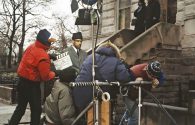
Whatever film I make is some extension of myself, Barbara Loden told French film critic Michel Ciment at the Venice Film Festival in 1970, where Wanda, her landmark directing debutwhich she also wrote and starred inpremiered, eventually winning the International Critics Award. The heartbreaking, hoped-for plural implied by whatever film would never be realized: Wandaabout the desultory existence of a woman from deepest Pennsylvania coal country who abandons her husband and small children, soon taking up with an incompetent bank robberwas the only movie Loden, who died of cancer in 1980 at age 48, ever made.
Details
Wanda
Directed by Barbara Loden
October 27
MOMA
Related Content
More About
Screening at MOMA on October 27 as part of its To Save and Project film preservation series (and introduced by Sofia Coppola, among others), Wanda is the singular vision of an artist who hailed from surroundings as bleak and limited as her title characters. Born in 1932 in Marion, North Carolina, Loden recalled to Ciment: If I had stayed there, I would have gotten a job at Woolworths, I wouldve gotten married at 17 and had some children, and would have got drunk every Friday and Saturday night. Fortunately, I escaped.
She came to New York, where she danced at the Copacabana, got a pie in the kisser and was sawed in half on The Ernie Kovacs Show, and, in 1957, met Elia Kazan, who, in his 1988 memoir, Elia Kazan: A Life, remembers her as a sexed-up hillbilly. Before they wed in 1967, he cast her in a small role as Montgomery Clifts secretary in Wild River (1960) and as Warren Beattys town-slut flapper sister in Splendor in the Grass (1961); Loden won a Tony for her performance as Maggie, the Marilyn Monroe surrogate, in Kazans 1964 production of Arthur Millers After the Fall.
Loden, who would remain married to Kazan until her death, though they were frequently estranged, always acknowledged his support in making Wanda: He helps me every way he can. Its good to have an expert around. What he tried to do was get me to do what I wanted to do, and thats not the way he wouldve done it, she said in a New York Times profile in March 1971, shortly after Wandas U.S. release. Kazans memory of encouraging Loden, however, differs: She asked me to direct it, but I declined. I didnt see life as she didsentimentally, I thought. So she found a man whod work with her, photograph the action, and cut the film. [Nicholas] Proferes and Barbara were well matched. He supplied everything she lacked, and vice versa.
Despite Kazans patronizing version of events, Wanda is anything but sentimental. Refusing to portray its heroine as either victim or enlightened proto-feminist, the film is a rarity for its (or any other) era. She doesnt know what she wantsbut she knows what she doesnt want. And shes trying to get out of this very ugly type of existence. But she doesnt have the equipment, Loden would say of her character on The Mike Douglas Show.
Inspired by cinema verité and the rough-hewn aesthetic of Warhols films (I said, Gee, everything doesnt have to be so perfect, she laughed to Ciment), Wanda, shot in 16mm, is a road movie that culminates in a dead end. Wiser, and perhaps angrier, after her adventures, Wanda is still without resources and destined to continue drifting. Shes trapped and she will never, ever get out of it and there are millions like her, Loden told the New York Times. Wanda bears the rawness of its creators memories of barely making it out herself.